Is Painless Hair Transplantation Possible?
Do you want to have a hair transplant but are afraid of pain? As Istanbul Stella Hair, we clearly explain how local anesthesia is applied, what you can feel at which stage, and what awaits you after the operation. Our goal is to help you make decisions with realistic expectations about pain.
 representative image
Is pain felt during hair transplantation?
By using local anesthesia in hair transplantation, we aim to reduce the sensation in the areas where we take and place the roots. Once numbness is achieved, pain can be largely controlled during the procedure. However, you may feel stinging or burning while being anesthetized; the feeling of pressure and touch may not disappear completely.
Do not interpret the phrase "painless hair transplantation" you see on the internet as meaning that you will not feel anything at any stage. Everyone's pain threshold, response to anesthesia and post-procedure sensitivity are different. In our initial consultation, we discuss these issues with you, listen to your past experiences and answer your questions.
We do not offer the hair transplantation method, transplantation pen or sapphire tip alone as a guarantee of painlessness. General stages of hair transplantation You can learn the whole process by examining it.
Send us your pain and anesthesia questions ↗Our comfort planning before hair transplantation in Istanbul
When we talk about the operation, we not only address your hairline, but also your anesthesia concerns and health information.
First we listen to your health history
We would like you to share with us your previous reactions to anesthesia, your allergies, the medications you use regularly and important health information.
We tell you what feelings to expect
We explain the short-term discomfort that may occur while local anesthesia is applied, the feeling of touch after numbness, and why communication is important during the procedure.
We are talking about the aftercare process
On the first night, we inform you about the sensitivity of the donor area and the use of recommended medications. We also tell you which symptoms you should contact your healthcare team for.
representative image
How do you feel during local anesthesia?
One of the most curious moments in hair transplantation is the anesthesia phase. You may feel pins and needles, short-term burning or pressure while the local anesthetic drug is applied. After numbness develops, we aim to reduce the pain during the rooting and transplantation stages.
The level of numbness and sensations may vary from person to person. If you experience any significant discomfort during the procedure, we ask you to tell our team. The relevant healthcare professional makes the necessary checks and decides to continue.
Terms such as “needle-free” or “sedation-based” do not mean that procedures are automatically applied to every patient. We clarify the anesthesia method to be used, its advantages and limitations with the attending physician in advance.
Get Information About Anesthesia ↗How do we explain the anesthesia and comfort process in hair transplantation?
We collect your health information
We listen to the medications you use, your known allergies, your anesthesia experiences and your concerns about pain. The relevant physician conducts the health assessment.
We explain anesthesia
We explain which areas will be numbed with local anesthesia and what sensations may be experienced during the procedure. The relevant physician determines the medication and application plan.
We would like you to report your discomfort.
If you feel pain or significant sensitivity during root extraction and transplantation from the donor area, we want you to inform us immediately. The medical team evaluates the numbness and your complaint.
We share care information for the first days
We talk about returning home, sleeping position, protecting the recipient area, and medication instructions. We explain when you should contact in the first days.
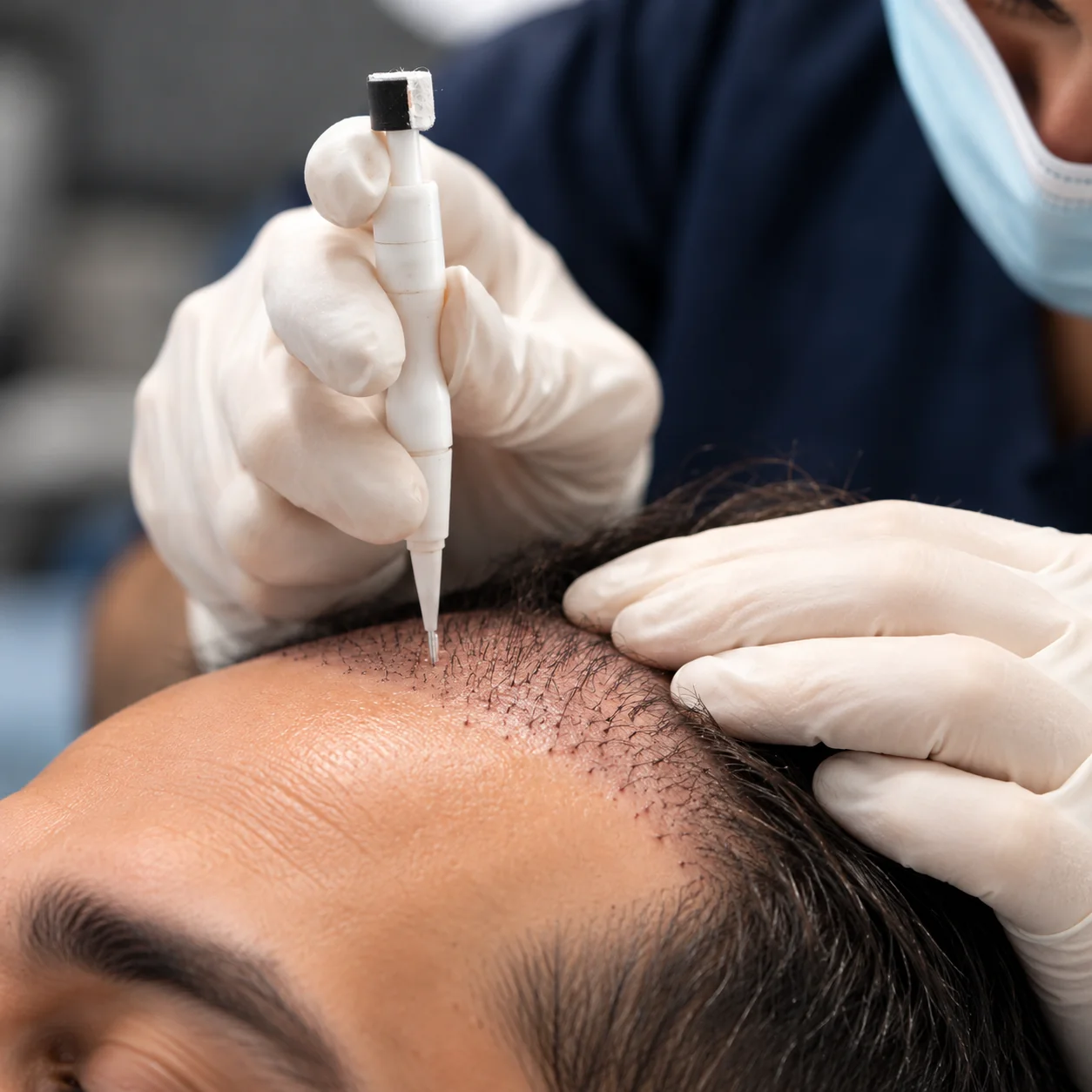 representative image
Is there a difference in pain between DHI and Sapphire FUE hair transplantation?
In DHI application, we place the hair follicles with an implanter pen. In Sapphire FUE, we open the transplantation channels with a sapphire tip and transfer the roots into these channels. In both applications, anesthesia planning is important to control pain in the donor and transplantation areas.
We are not saying that choosing DHI or Sapphire FUE alone means less pain. Your feeling of pain; the application of anesthesia may depend on the extent of the procedure and your personal sensitivity. We discuss the methods according to your hair structure and transplantation needs.
Check out our DHI hair transplantation method ↗ Check out Sapphire FUE hair transplantation ↗ representative image
Pain and tenderness after hair transplantation
When the numbing effect decreases, you may feel tension, tingling and tenderness in the donor area or the transplantation area. Swelling and redness may also occur. We tell you what you can expect in the first days; we want you to share your complaints with us.
It is important that you follow the medication and care instructions given to you. Do not take additional painkillers without your doctor's recommendation, and do not stop taking your regular medications at your own discretion. Protect your head from impacts and do not apply pressure to the transplantation area.
Increasing pain, fever, foul-smelling discharge, increasing redness, or unexpected worsening If you experience it, contact the healthcare team without waiting for the check-up day. If you think you have an emergency, call emergency medical services.
Read our post-hair transplant patient guide ↗Frequently asked questions about painless hair transplantation and local anesthesia
We provide clear answers to the questions we hear most about pain, numbness and recovery.
Is hair transplantation completely painless?
We aim to reduce the pain in the procedure areas with local anesthesia. However, you may feel short-term stinging or burning while anesthesia is applied. Pressure and tactile sensations may continue during the procedure. We do not guarantee that you will not feel anything at any stage.
Is pain felt during local anesthesia in hair transplantation?
While applying the numbing medicine, you may experience a short-term stinging, burning or pressure feeling. We talk about your pain threshold and previous anesthesia experiences in the initial consultation.
Am I completely asleep during hair transplantation?
With local anesthesia, you usually remain awake; we only aim to reduce the sensation of the procedure area. Sedation and general anesthesia are different applications. We clarify the anesthesia plan that will be applied to you with the relevant physician.
Is there a difference in pain between DHI and Sapphire FUE hair transplantation?
The main difference between DHI and Sapphire FUE is in the placement of the roots. Operation comfort is not determined only by the method name; Anesthesia plan, procedure duration and personal pain sensitivity are also important.
Is needle-free anesthesia applied to every patient?
The name needle-free procedure does not indicate that the method to be used is suitable for every patient or that there will be no pain. At Stella Hair, we explain the anesthesia method to be used for you and its alternatives, if any, in the initial consultation; we do not promise an unverified method as our standard service.
How many days does the pain last after hair transplantation?
In the first days, you may experience tenderness, tension and mild pain in the donor area or transplantation area. Duration and severity vary from person to person. We explain the expected recovery process and what symptoms you should contact us at.
Should I use painkillers before the operation?
Do not add painkillers without your doctor's advice, and do not stop taking regular medications yourself. Share your medications, supplements and allergies with us during the initial consultation.
What should I do if I feel pain during the procedure?
If you experience pain or significant discomfort, report it to our healthcare team immediately. This way, the relevant healthcare professional can check your level of numbness and make the necessary assessment.
More information about hair transplantation methods and preparation
We explain the differences between the methods and the post-operative process in detail on separate pages.
Let's talk about your pain concerns together
If you want to know what feelings you will experience during hair transplantation, contact us. We listen to your questions about anesthesia and help you with the initial consultation.
Request a Initial Consultation ↗