Beard and Mustache Transplantation in Istanbul
As Istanbul Stella Hair, we examine the gaps in your beard, sparse cheek areas and mustache line together. We clearly discuss with you the beard line suitable for your facial structure, where the hair follicles will be taken from and the post-transplant care process.
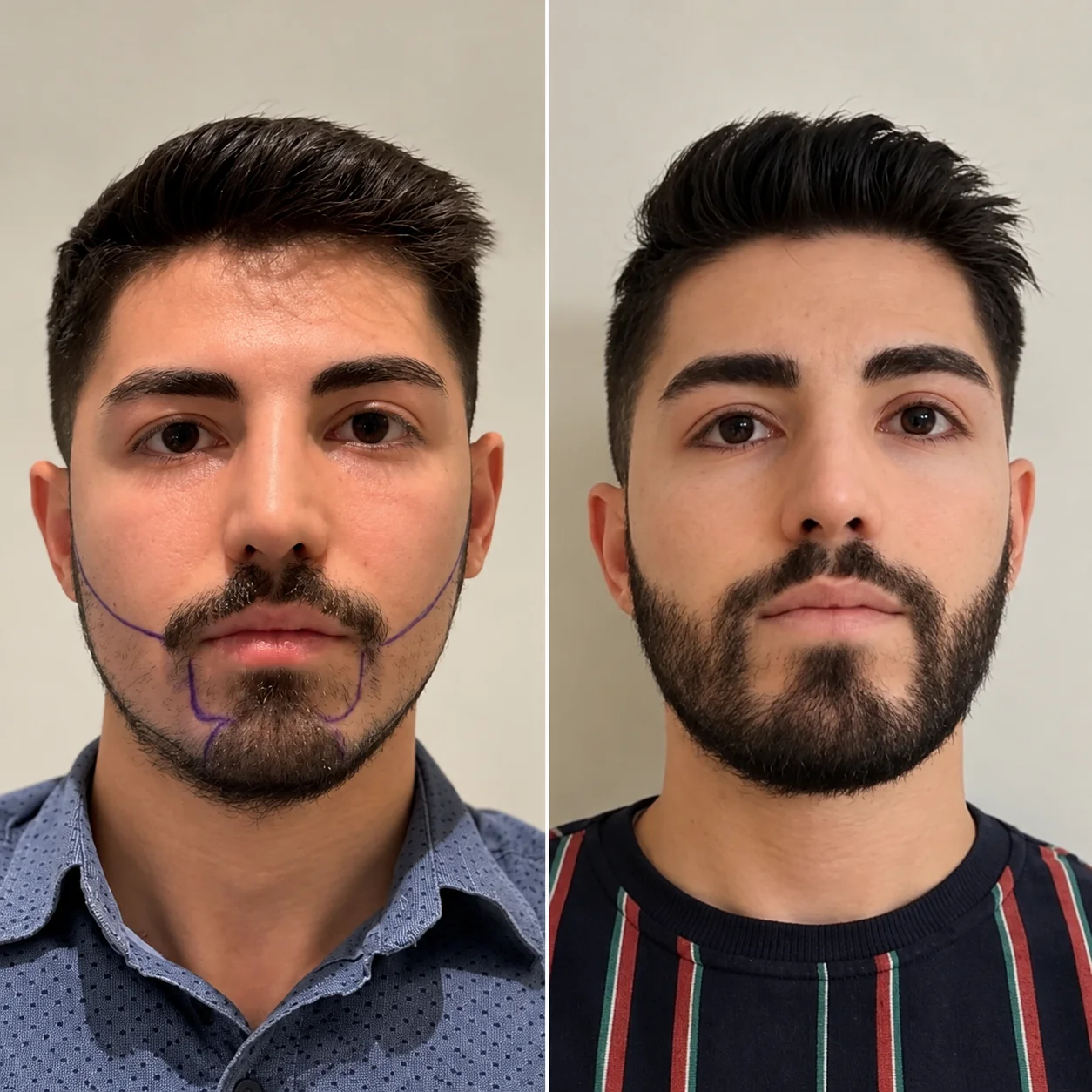 comparison photo
What is beard and mustache transplantation?
Beard and mustache transplantation is a procedure in which we transport suitable hair follicles to areas of the face where there is sparse or no hair. The appearance of the beard on the cheeks and jawline is not the same as the appearance of the mustache on the lips. That's why we prepare a different drawing and root layout plan for each region.
We conduct initial consultations with people who have a sparse beard from birth, who want to fill the gaps in their beard line, or who have hair loss in a certain area. First, we examine the cause of the rarity, the condition of the skin and the donor roots we can use. If there is active skin disease or newly developing hair loss, we prioritize appropriate medical evaluation.
When researching beard transplantation in Istanbul, we recommend that you do not focus only on the number of grafts. One of the key elements that contribute to a natural appearance is the placement of hair follicles at an angle and direction compatible with the existing hair on your face.
Contact us for beard and mustache transplantation ↗Three basic issues we plan for beard transplantation
We do not see beard transplantation as just adding roots to the gaps. We discuss together how the beard will look on your face, how it will combine with existing hairs, and how many roots we can get from the donor area.
Beard line suitable for the face
We examine the cheek border, sideburn transitions, jaw line and mustache connections according to your facial proportions. We listen to the beard shape you like and discuss a drawing that suits your existing hair.
Hair direction and graft selection
The hair on the cheeks, chin and lips do not grow in the same direction. We create our placement plan by comparing the thickness of the roots, the angle of emergence, and the structure of your existing beard.
Protection of the donor area
We mostly evaluate the roots on the nape and sides of the head. When planning the grafts we will reserve for beard transplantation, we also pay attention to not causing unnecessary thinning in the area where the root is taken.
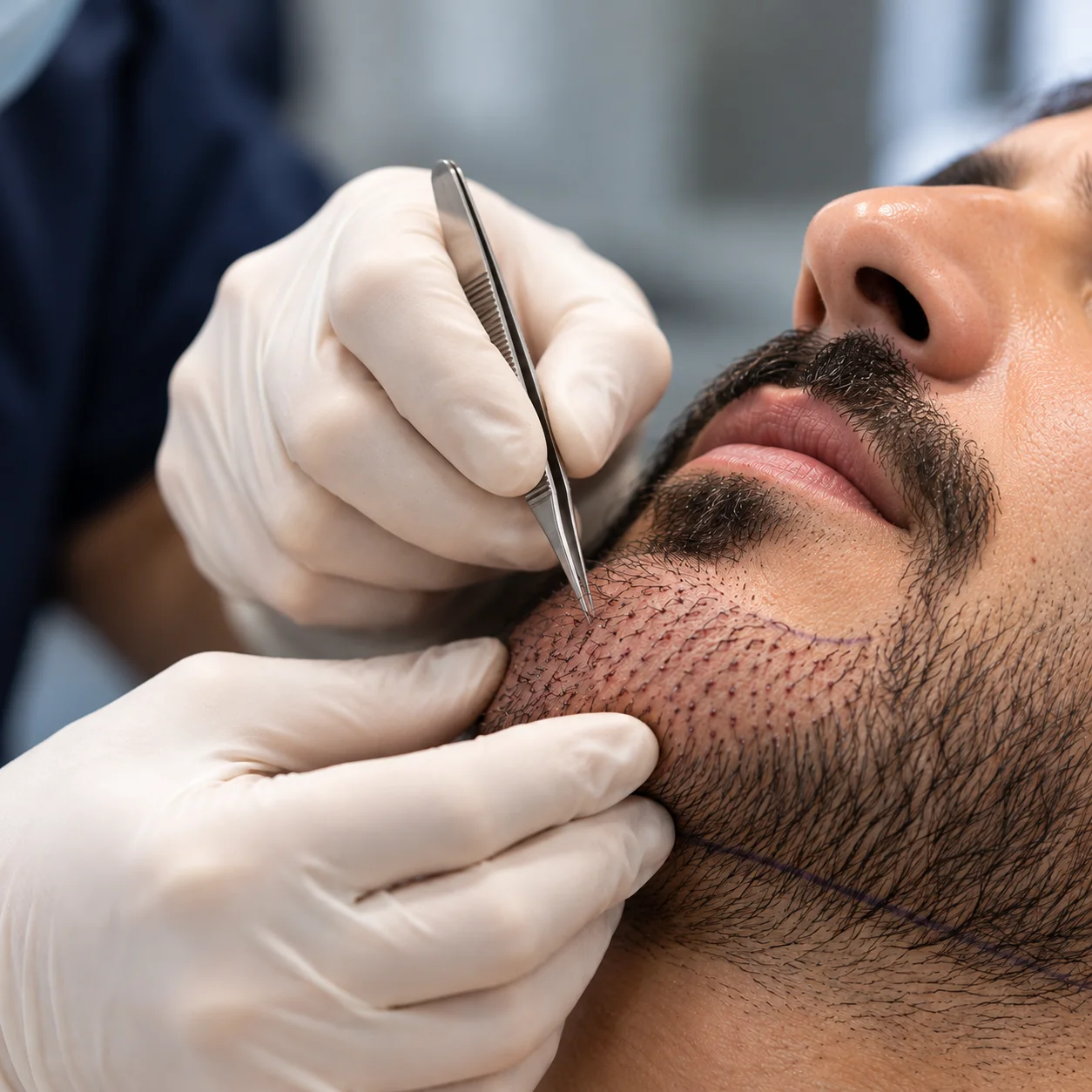 representative image
Why do we plan mustache transplantation separately?
In mustache transplantation, we aim to fill the gaps above the lips or highlight the existing mustache line. In this area, the direction of hair growth and the way it lies close to the skin is different from the cheek beard. For this reason, we evaluate the mustache line and the placement of the grafts separately.
If there is a difference in shape between the two sides of the moustache, we examine this during the consultation. We plan the number of follicles to be used not only according to the size of the gap, but also according to the existing hair density, hair shaft thickness and donor area.
Get Information About Mustache Transplantation ↗Beard and mustache transplantation process at Stella Hair in Istanbul
We explain the process clearly, from the first meeting to post-operative care. We share the plan we prepared for you before the procedure and the points you need to pay attention to.
Beard, mustache and skin examination
We discuss sparse areas, previous scars, skin complaints and your health history. We examine the structure and quantity of hair follicles we can use.
Beard line and graft plan
We draw the cheek, chin, sideburns and mustache line separately. We explain the areas to be transplanted and the graft distribution, taking into account the direction of your existing hair.
Graft Extraction and Implantation
After being informed about local anesthesia, we take the appropriate roots from the donor area, prepare them and place them at the planned points in the face area.
First wash, care and follow-up
We explain how to protect the transplantation area, how to wash your face and when you can return to shaving. We give information about the changes you may encounter in the first days.
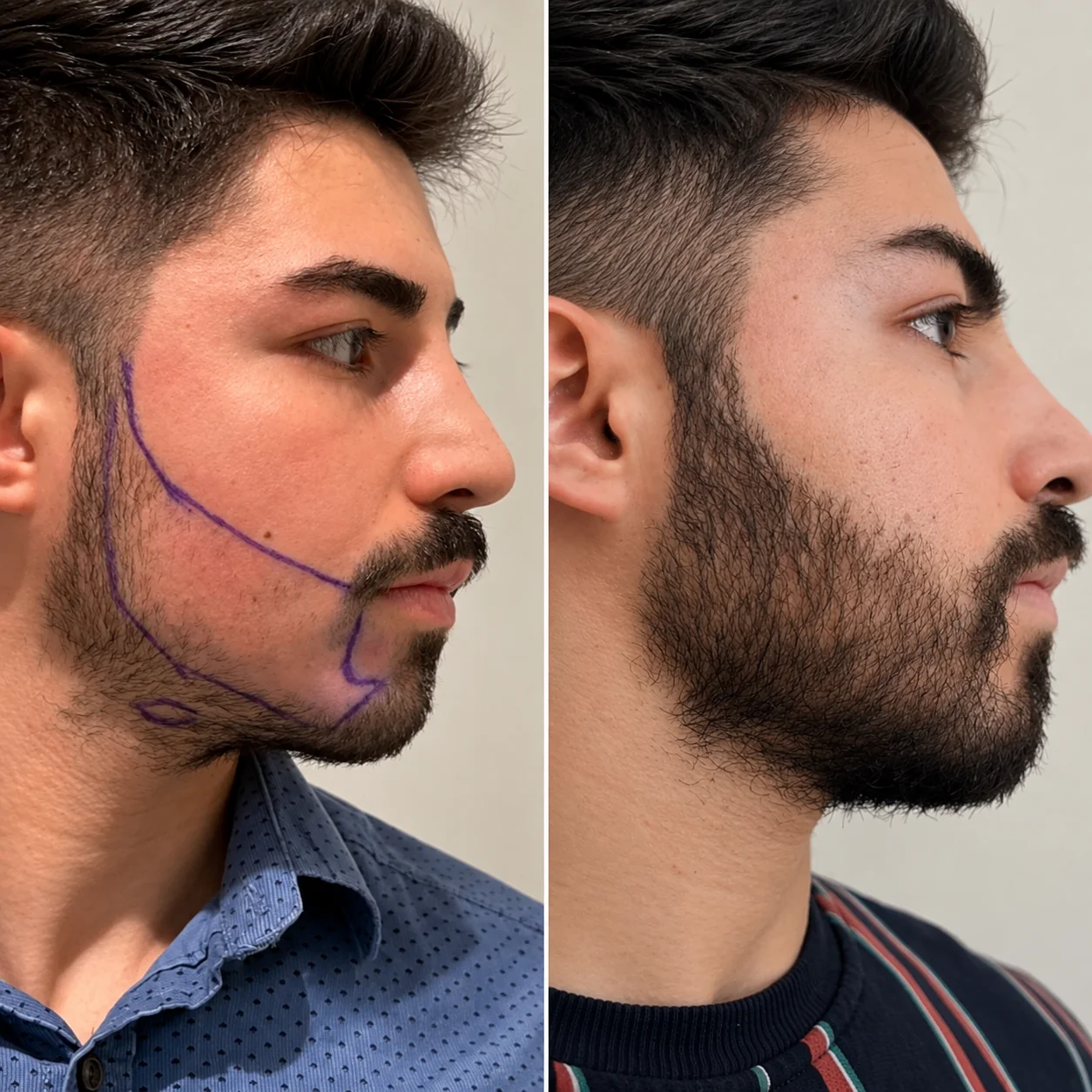 comparison photo
No beard growth and areas with scars
A thin beard is not always due to the same reason. A separate evaluation is required for congenital sparse beard, subsequent regional hair loss and scar-related gaps. Therefore, we first ask you how long you have been experiencing this problem and examine the current condition of the skin.
If you are considering beard transplantation on a scar, we also discuss the characteristics of the scar tissue and the suitability of the transplantation area. We do not guarantee that the same density will be achieved in every scar or that every hair follicle will be retained.
Initial consultation for gaps in the facial area ↗How many grafts are required for beard transplantation?
We do not recommend the same number of grafts for everyone in beard transplantation. Reconstructing the entire beard line with a small cheek gap does not require the same amount of roots.
We evaluate the amount of follicles we will need according to the scope of the beard drawing, the density of the existing hairs, the thickness of the hair strands and the capacity of the donor area. We also explain that since a graft can contain one or more hair strands, the number of grafts and the number of hairs do not mean the same thing.
Instead of concentrating all of the roots in a single area, we plan in advance how we will distribute them among the cheeks, chin, sideburns and moustache. Thus, we consider both the appearance of your face and the donor hair you may need in the future.
representative image
Care and shaving after beard and mustache transplantation
In the first days, redness, slight swelling and small crusts may be observed in the transplantation area. We tell you how to wash your face, how to protect the transplantation area from friction and why you should not pick off the scabs. We also inform you about items that come into contact with your face, such as masks and clothes.
We do not recommend that you start using razors, shavers and scissors at the same time. We share the return to shaving plan, taking into account the recovery of your skin. There may be temporary shedding of some of the transplanted hairs in the first weeks; we follow the development of new hairs over months.
If you experience increasing pain, fever, discharge or an unexpected deterioration, we ask you to contact the healthcare team without waiting for the planned check-up date.
Check out our post-operative care guide ↗What you wonder about beard and mustache transplantation
We answer the most frequently asked questions about beard line, graft extraction, mustache transplantation and post-procedure shaving.
Where do we get the hair follicles for beard and mustache transplantation?
We mostly use the appropriate roots on the nape and side areas of the head. We compare the thickness and structure of the roots with your current beard and prepare a plan that will preserve the capacity of the donor area.
Is beard transplantation and mustache transplantation the same procedure?
The basic principle is similar: we take suitable roots and place them in sparse areas on the face. However, the direction of the hair on the lip, skin structure and hair transplantation area are different from the cheek and chin. For this reason, we plan the mustache line and root distribution separately.
Can transplantation be done in areas where beard does not grow?
We can discuss transplant options for areas that are naturally sparse or have regional gaps. We first examine the cause of the gap, the condition of the skin and its donor area. If there is an active skin disease, we give priority to the relevant medical evaluation.
Can beard or mustache transplantation be done on scars?
Transplantation may be planned for some old scars. However, the thickness of the scar tissue, its blood supply and the condition of the skin affect the result. We are not saying that every scar will have the same root; First we evaluate the area.
When can I shave after beard transplantation?
Razors, razors and scissors contact the skin in different ways. That's why we don't give everyone a single day. We follow the healing of the recipient area and explain which tool you can use and when.
When do transplanted beards and mustaches start to grow?
Temporary shedding may occur in some of the transplanted hairs in the first weeks. New emergence and concentration develop over months; the first day's view does not indicate the final result. We evaluate your process during checks.
How do we plan the natural hair direction in beard transplantation?
We examine the direction of the existing hair in the cheek, sideburns, jawline and mustache area separately. When determining the transplantation area, we pay attention not only to the width of the space, but also to the angle at which the hair grows close to the skin and its compatibility with the existing beard.
Will I feel pain during beard and mustache transplantation?
We inform you about the use of local anesthesia during the procedure. There may be a stinging or burning sensation during the numbing phase, and a feeling of pressure or touch afterwards. We discuss your pain concerns in the initial consultation and address your medical questions with our relevant healthcare team.
More information about beard, eyebrow and hair transplantation
We explain the needs of different recipient areas separately. You can review the details of the service you are interested in on its own page.
Let's talk about your beard and mustache line together.
Tell us about the areas you want to change in your beard or moustache. Let's evaluate your facial structure, donor roots and the operation process together in the initial consultation.
Request a Initial Consultation ↗