Swelling After Hair Transplant: Causes & Recovery Time
Why do the forehead and eyes swell after a hair transplant? Learn how long swelling lasts, how to reduce it, and when to seek medical attention.
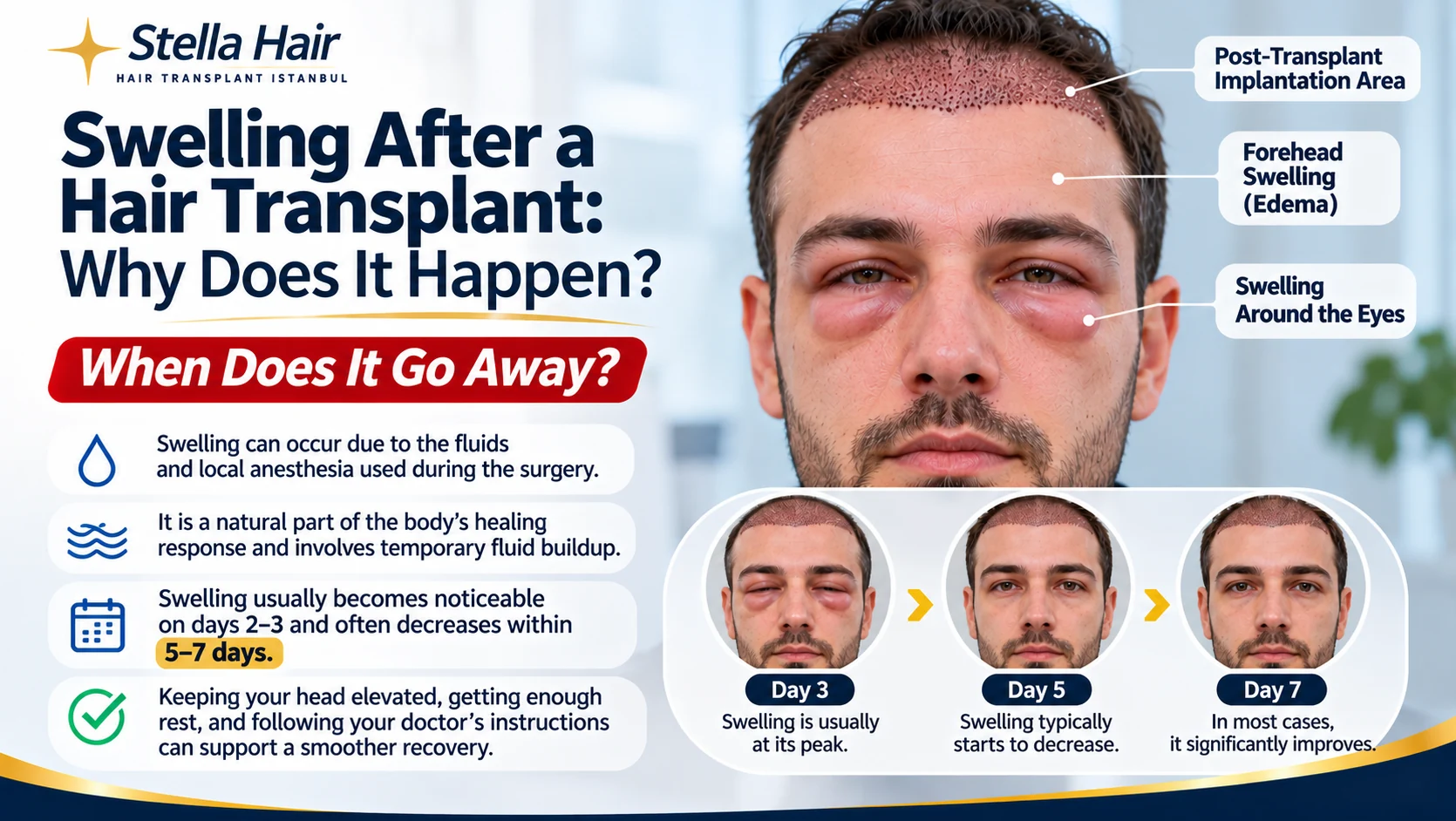
Why Do the Forehead and Eyes Swell After a Hair Transplant? When Does It Go Away?
Swelling around the forehead, eyelids, and eyes is a common concern among patients recovering from hair transplant surgery. Although swelling may not be immediately noticeable after the procedure, it can become more visible during the second or third day. For patients undergoing hair transplantation for the first time, these changes in facial appearance may be surprising or concerning. However, swelling after a hair transplant is often a temporary response associated with the fluids used during surgery and the body's natural healing process. At Istanbul Stella Hair, we believe that understanding the expected stages of recovery helps patients recognize normal postoperative changes and know when medical attention may be necessary.
At Istanbul Stella Hair, we consider postoperative care an important part of the overall hair restoration experience. Swelling that initially develops around the forehead can sometimes move downward toward the eyebrows and eyelids, making the eyes appear puffy or partially swollen. This can be particularly worrying for patients who are unfamiliar with the recovery process. So, why does swelling occur around the forehead and eyes after a hair transplant? How long does facial swelling last, when does it usually reach its peak, and what precautions may help reduce discomfort? In this guide, we explain the causes, typical timeline, and important warning signs associated with swelling following hair transplantation.
What Causes Swelling After a Hair Transplant?
Swelling after hair transplantation is generally associated with a temporary accumulation of fluid in the tissues, medically known as edema.
During a hair transplant, hair follicles are extracted from the donor area and implanted into areas experiencing hair loss.
Local anesthesia and other medical solutions may be introduced into the scalp to support the surgical procedure.
Some of these fluids can temporarily remain within the surrounding tissues after surgery.
In addition, the body's natural inflammatory response to the procedure can contribute to fluid accumulation.
Several factors may influence postoperative swelling:
- Local anesthetic solutions and fluids used during surgery
- The body's normal inflammatory response
- Temporary fluid retention in the scalp tissues
- Gravity causing fluid to move downward
- Individual healing characteristics
- The extent and duration of the procedure
Not every patient experiences the same degree of swelling.
Some individuals develop only mild forehead puffiness, while others may notice swelling extending toward the eyes.
The amount of swelling alone does not necessarily indicate whether a hair transplant has been successful.
Why Does the Forehead Swell After a Hair Transplant?
The forehead is one of the areas where swelling may first become noticeable after hair transplantation.
This is particularly relevant when the frontal hairline or surrounding scalp has been treated.
Fluids introduced during the procedure, combined with the body's healing response, may cause temporary puffiness or fullness in the forehead.
Some patients describe this sensation as tightness or pressure beneath the skin.
Forehead swelling may develop during the first day, although its appearance and severity vary.
For example, a patient may notice very little swelling immediately after surgery but develop more visible puffiness the following day.
This does not automatically mean that transplanted hair follicles have been damaged.
However, swelling accompanied by increasing pain, spreading redness, fever, or unusual tenderness should be assessed by a healthcare professional.
Why Do the Eyes Swell After a Hair Transplant?
Swollen eyes after a hair transplant can occur when fluid accumulated in the scalp and forehead moves downward under the influence of gravity.
As this fluid travels toward the eyebrows and eyelids, it may create noticeable puffiness around the eyes.
The tissues surrounding the eyelids are particularly susceptible to visible fluid accumulation.
As a result, even a relatively small amount of edema can make the eyes appear significantly swollen.
Common changes may include:
- Puffy upper eyelids
- Swelling around the eyebrows
- Mild puffiness beneath the eyes
- Swelling gradually moving from the forehead toward the eyes
- Eyes appearing smaller because of swollen surrounding tissues
These symptoms can occur during the normal postoperative recovery period.
However, significant eyelid swelling that makes it difficult to open the eyes should be discussed with the medical team.
Sudden vision changes, loss of vision, double vision, or severe eye pain are not normal recovery symptoms and require urgent medical assessment.
How Long Does Swelling Last After a Hair Transplant?
Swelling after a hair transplant often becomes most noticeable during the first two to three days and substantially improves within approximately five to seven days.
For some patients, mild residual swelling may continue for seven to ten days.
However, recovery times vary.
The amount of fluid used during surgery, individual tissue characteristics, and the extent of the procedure can influence how quickly swelling resolves.
Hair Transplant Swelling Timeline
Time After Surgery
Possible Changes
Day 1
Mild forehead swelling may develop, although some patients notice very little change.
Day 2
Forehead puffiness may become more visible.
Day 3
Swelling may reach its most noticeable stage and extend toward the eyelids.
Day 4
Swelling may persist, although some patients begin noticing improvement.
Days 5–6
Edema often starts decreasing significantly.
Day 7
Many patients experience substantial improvement.
Days 7–10
Mild remaining swelling may gradually resolve.
This timeline is a general guide rather than a guaranteed recovery schedule.
Patients whose swelling continues to worsen or lasts longer than expected should contact the healthcare professionals responsible for their treatment.
Is Increased Swelling on Day 3 After a Hair Transplant Normal?
The third day is often one of the periods when postoperative edema becomes most noticeable.
Some patients leave the clinic with little visible facial swelling.
During the following 48–72 hours, however, the forehead may become puffy, and swelling may move toward the eyebrows and eyelids.
This progression can occur because fluid gradually redistributes through the surrounding tissues.
For some individuals, eyelid swelling may appear more dramatic than the initial forehead swelling.
While this can be part of normal recovery, it is important not to assume that every new or worsening symptom is harmless.
Severe pain, fever, rapidly progressing redness, or visual disturbances require prompt medical evaluation.
Patients should contact their medical team if they are uncertain whether their symptoms are within the expected recovery range.
How to Reduce Swelling After a Hair Transplant
In most cases, postoperative swelling gradually resolves as the body heals.
Certain precautions may help support recovery and improve comfort.
However, patients should always prioritize the aftercare instructions provided by their healthcare team.
1. Keep Your Head Slightly Elevated
Keeping the head elevated during the early recovery period may help limit the movement of fluid toward the face.
Some patients are advised to sleep with their upper body slightly raised during the first few nights.
The exact sleeping position should follow the instructions provided after surgery.
Patients should also avoid placing unnecessary pressure on the transplanted area.
Pillows and supportive cushions may be useful when positioned correctly, but they should not rub against newly implanted follicles.
2. Avoid Strenuous Physical Activity
Heavy exercise, strenuous lifting, and intense physical activity may not be appropriate during the early postoperative period.
Activities that increase pressure around the head or involve prolonged bending may contribute to discomfort.
For this reason, patients are often advised to limit strenuous activities while the scalp begins healing.
The appropriate time to resume exercise depends on the individual's recovery and the recommendations of the treating healthcare professionals.
Light daily movement may be possible earlier, but it should not interfere with postoperative instructions.
3. Be Careful With Cold Compresses
Some postoperative care protocols include carefully controlled cold compresses to help manage discomfort or swelling.
However, ice packs or cold compresses should never be placed directly on newly transplanted hair follicles unless specifically instructed by the treating medical team.
Pressure or excessive cold applied incorrectly may irritate the treated area.
Patients should consult their healthcare professionals before using cold therapy.
If recommended, the location, duration, and method of application should follow individualized medical instructions.
4. Take Medications Only as Prescribed
In certain circumstances, healthcare professionals may prescribe medications to manage postoperative inflammation or swelling.
These medications are not necessarily suitable for every patient.
For example, corticosteroids may require additional consideration in individuals with diabetes, hypertension, or other medical conditions.
Patients should never begin taking anti-inflammatory medications, corticosteroids, or other treatments without appropriate medical advice.
Medication use should be based on the patient's medical history and the treatment plan established by qualified healthcare professionals.
5. Follow the Recommended Recovery Plan
Adequate rest, proper postoperative care, and attendance at scheduled follow-up appointments are important aspects of recovery.
At Istanbul Stella Hair, we emphasize the importance of recognizing expected postoperative changes and distinguishing them from symptoms that may require medical attention.
Patients should avoid manipulating the scalp or applying products that have not been approved by their healthcare team.
Can Swelling Damage Transplanted Hair Follicles?
Ordinary mild or moderate postoperative swelling does not automatically indicate damage to transplanted hair follicles.
Swelling in the forehead or around the eyes is not the same as graft loss.
The healing of transplanted follicles and the redistribution of fluid through facial tissues involve different biological processes.
Temporary edema can occur without compromising the transplanted follicles.
However, patients should not dismiss every form of swelling as harmless.
Swelling associated with infection, significant bleeding, or another postoperative complication requires appropriate medical assessment.
The severity, progression, and accompanying symptoms are more informative than swelling alone.
Can Bruising Occur Around the Eyes After a Hair Transplant?
Yes. Some patients may experience mild bruising around the eyes in addition to swelling.
Bruising can develop when small blood vessels are affected during surgery or when minor bleeding occurs within the surrounding tissues.
The affected area may initially appear bluish or purple before gradually changing color as healing progresses.
Not every patient develops bruising.
Mild bruising may improve naturally during recovery.
However, severe bruising accompanied by rapidly increasing swelling, significant pain, or visual symptoms should be assessed promptly.
Patients should not apply pressure or attempt to massage bruised areas without medical guidance.
When Is Swelling After a Hair Transplant Dangerous?
Although temporary edema can be an expected postoperative reaction, some symptoms may indicate a complication.
Patients should seek medical advice when experiencing:
- Swelling that continues to worsen rather than improve
- Severe or increasing pain
- Fever or chills
- Spreading redness or unusual warmth around the surgical area
- Purulent or foul-smelling discharge
- Significant one-sided swelling or unusual tenderness around the eyes
- Unexpected deterioration after an initial period of improvement
Urgent medical attention is necessary if swelling is associated with loss of vision, double vision, severe eye pain, or pain during eye movement.
Sudden swelling of the lips, tongue, or throat, particularly when accompanied by breathing difficulties, also requires emergency medical care.
These symptoms should never be dismissed as ordinary postoperative edema.
Can Swelling Occur After an Unshaven Hair Transplant?
Yes. Patients undergoing an unshaven hair transplant can also experience temporary forehead or eye swelling.
An unshaven technique preserves the existing hair length, but it does not eliminate the body's response to a surgical procedure.
Local anesthesia, follicle extraction, and implantation still involve medical intervention in the scalp tissues.
Consequently, fluid accumulation and postoperative swelling remain possible.
At Istanbul Stella Hair, we offer unshaven hair restoration approaches designed to preserve existing hair length.
However, maintaining hair length should not be confused with preventing every possible postoperative symptom.
The degree of swelling depends on several factors, including the procedure itself and the patient's individual healing response.
Frequently Asked Questions
Is eye swelling normal after a hair transplant?
Mild to moderate swelling around the eyes can occur after hair transplantation, particularly during the second and third days. It often improves within the first week. However, severe pain, visual changes, or signs of infection require medical assessment.
How long does forehead swelling last after a hair transplant?
Forehead swelling often becomes noticeable during the first few days and substantially improves within approximately five to seven days. Some patients may experience mild swelling for longer.
Why do eyelids become swollen after a hair transplant?
Fluid introduced during surgery and fluid associated with the healing response may move downward from the scalp and forehead under the influence of gravity, causing puffiness around the eyelids.
Is swelling worse on the third day after a hair transplant?
It can be. Swelling may become most noticeable around the second or third day. However, rapidly worsening swelling accompanied by severe pain, fever, or visual changes should not be considered routine.
Can I use ice to reduce swelling after a hair transplant?
Some aftercare protocols allow carefully controlled cold applications. However, ice should not be applied directly to transplanted follicles. Patients should follow their healthcare team's instructions before using cold compresses.
Does swelling mean that transplanted grafts have failed?
No. Ordinary postoperative swelling does not automatically indicate graft failure. However, swelling accompanied by signs of infection or other complications requires medical evaluation.
When does facial swelling completely disappear after a hair transplant?
Many patients experience substantial improvement within the first week. Mild residual swelling may continue for seven to ten days in some individuals. Persistent or worsening symptoms should be evaluated by a healthcare professional.
Conclusion: Swelling After a Hair Transplant Is Usually Temporary
Swelling around the forehead and eyes after a hair transplant is often a temporary postoperative response.
It can occur because of fluids used during the procedure, the body's natural inflammatory reaction, and the movement of fluid through surrounding tissues.
Swelling frequently becomes more noticeable during the second and third days before gradually improving.
For many patients, substantial improvement occurs within approximately five to seven days, although recovery timelines vary.
At Istanbul Stella Hair, we believe that providing clear information about postoperative recovery helps patients understand what to expect and recognize when additional medical care may be necessary.
To learn more about hair restoration methods and the treatment process, explore our hair transplantation services.
Medical Disclaimer: This article is intended for general educational purposes only. It does not replace professional medical advice, diagnosis, or individualized postoperative instructions. Patients experiencing unusual or worsening symptoms should contact their treating healthcare professionals.
