Sun Exposure After Hair Transplant: When Is It Safe?
Can you go in the sun after a hair transplant? Learn when sun exposure is safe, how long to protect your scalp, and when to use sunscreen or a hat.
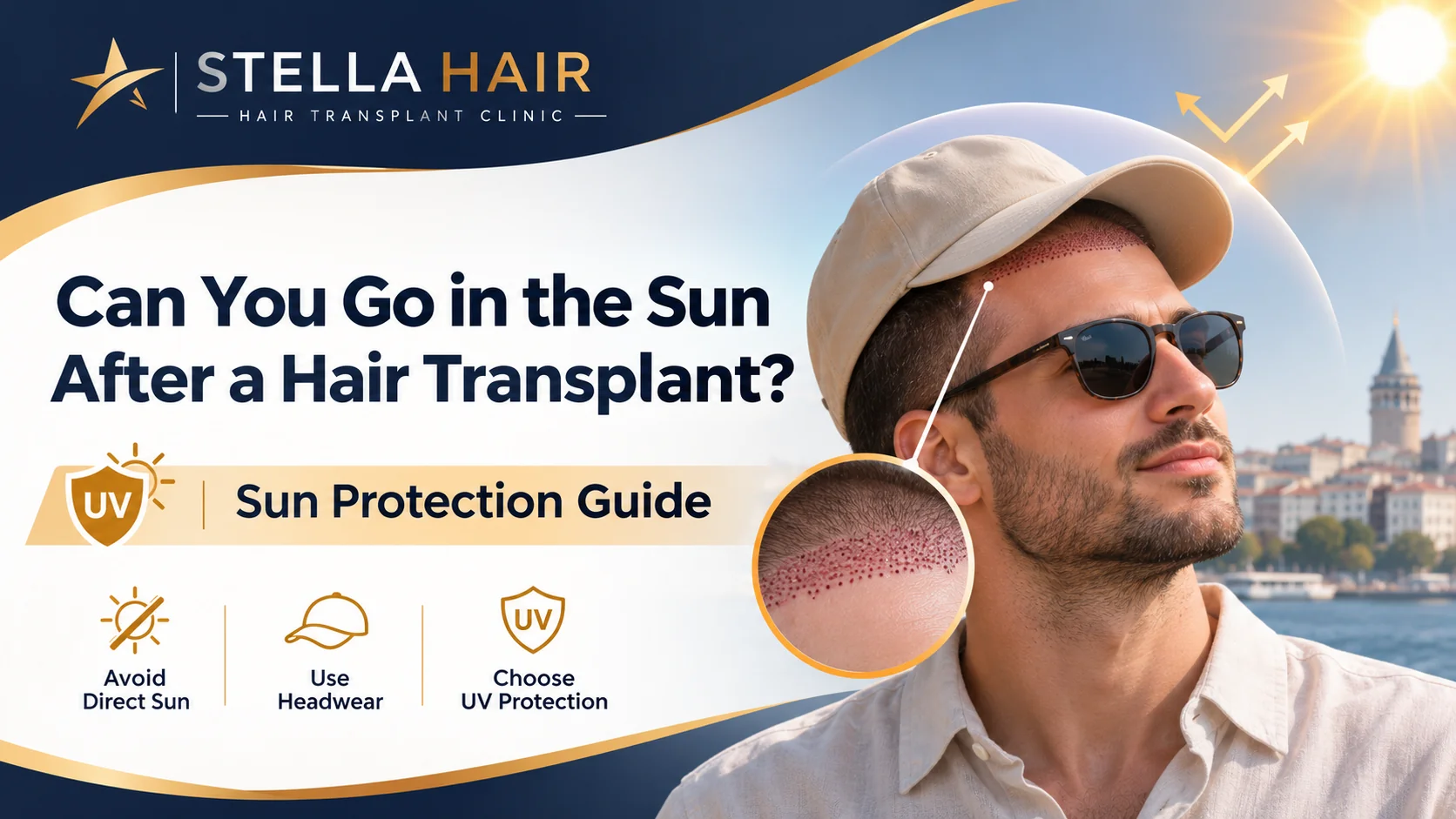
Can you go in the sun after a hair transplant? This is one of the most common questions patients ask during their recovery. People who undergo hair transplantation during summer, work outdoors, or want to return to their daily activities quickly often wonder whether sunlight can damage newly transplanted hair follicles. Going outside after a hair transplant is not completely prohibited. However, the recently treated scalp should be protected from direct and prolonged sun exposure. At Istanbul Stella Hair, we emphasize the importance of postoperative care in supporting a healthy recovery after hair transplantation.
At Stella Hair, we recommend that patients take precautions against direct sunlight, excessive heat, and environmental factors that may irritate the scalp during the first weeks after surgery. Whether the procedure involves DHI, Sapphire FUE, or completely unshaven Long DHI, the scalp needs time to heal from the small surgical wounds created during transplantation. So, how long should you avoid the sun after a hair transplant? Can sunlight damage transplanted grafts? When can you wear a hat or apply sunscreen? What precautions should patients take during summer? This guide explains sun exposure after hair transplantation, the recommended protection period, and how to safely return to outdoor activities.
Is Sun Exposure Harmful After a Hair Transplant?
Prolonged exposure to direct sunlight is generally discouraged during the first weeks following hair transplantation.
Hair transplantation is a surgical procedure in which hair follicles are extracted from a donor area and implanted into areas experiencing hair loss or thinning.
During the procedure, many small surgical wounds are created in both the donor and recipient areas.
These areas require time to heal.
During recovery, the scalp may be more sensitive than usual. Ultraviolet (UV) radiation from sunlight can contribute to irritation and inflammation in healing skin.
Excessive sun exposure, particularly when it causes sunburn, may interfere with the normal healing process.
However, an important distinction must be made:
Brief, accidental exposure to sunlight does not automatically mean that transplanted hair follicles have been damaged.
The main concern is prolonged, unprotected sun exposure during healing and the possibility of sunburn or additional skin injury.
How Long Should You Avoid the Sun After a Hair Transplant?
The recommended period of sun protection depends on the patient's healing progress and the instructions provided by the treating medical team.
International expert recommendations generally advise avoiding direct sun exposure during the first 2–4 weeks, with particular attention to protecting the donor and recipient areas throughout the first month.
This does not mean patients must remain indoors for an entire month.
Daily activities may require going outside. The important thing is to avoid spending extended periods under direct sunlight, seek shade whenever possible, and use appropriate protective measures.
Sun Protection Timeline After Hair Transplantation
Recovery Period
Recommended Precautions
Days 1–3
Avoid direct sunlight. Stay in cool, shaded, or indoor environments whenever possible.
Days 4–7
Limit outdoor exposure and seek shade. Avoid pressure or friction on the transplanted area.
Days 7–14
The scalp may remain sensitive. Continue avoiding prolonged direct sunlight.
Weeks 2–4
Maintain sun protection. Use a hat only when approved by your medical team.
Months 1–3
Gradually return to normal outdoor activities as healing allows. Avoid sunburn and maintain protection.
After month 3
Continue protecting the scalp from excessive UV exposure as part of regular skin care.
Important: This timeline is a general guide, not a universal medical schedule. The appropriate time to start using sunscreen or headwear depends on how well the scalp has healed, not simply on the number of days since surgery.
Can Sunlight Damage Transplanted Hair Follicles?
When considering the effects of sunlight after hair transplantation, it is important to distinguish between the transplanted follicles and the surrounding scalp tissue.
Hair follicles are living structures located beneath the skin.
After transplantation, the surrounding tissue begins a healing process.
Ultraviolet radiation can damage the outer layers of the skin and cause inflammation, especially when prolonged exposure results in sunburn.
This may interfere with the healing environment around the transplanted follicles.
However, there is no established medical rule stating that a few minutes of sunlight will automatically destroy transplanted grafts.
The primary concern is significant sunburn and tissue damage in the transplanted area.
Following sun protection instructions helps reduce avoidable risks while the scalp recovers.
Can You Go Outside During the First 7 Days After a Hair Transplant?
The first week after hair transplantation is a particularly sensitive stage of recovery.
During this period, the donor and recipient areas begin healing, and patients may experience redness, small scabs, tenderness, or swelling.
Prolonged exposure to direct sunlight may increase discomfort and irritation.
During the first seven days, patients should generally:
- Avoid spending long periods outdoors.
- Avoid standing or working under direct sunlight.
- Choose shaded areas whenever possible.
- Avoid applying sunscreen directly to the healing scalp without medical approval.
- Avoid tight hats or headwear that may press against the transplanted area.
- Stay away from extremely hot environments that may cause excessive sweating.
If going outside is necessary, the activity should be planned according to the instructions provided by the medical team.
For example, a short car journey is not equivalent to spending several hours working outdoors in the midday sun.
Can You Go in the Sun 10 Days After a Hair Transplant?
By the tenth day after transplantation, some patients may have experienced a significant reduction in scabbing.
However, this does not mean that every patient's scalp has completely healed.
Redness and sensitivity may continue for longer in some individuals.
Therefore, prolonged sun exposure or sunbathing without protection is not recommended simply because ten days have passed.
If redness, scabbing, or tenderness remains, additional caution is necessary.
Short outdoor activities may be possible depending on the individual's recovery and the instructions of the treating medical team.
Is Sun Exposure Safe One Month After a Hair Transplant?
Approximately one month after surgery, the initial healing process may be largely complete for many patients.
However, some scalp sensitivity may remain.
In individuals with fair or sensitive skin, redness can persist for longer.
Completing the first month does not automatically make prolonged, unprotected sunbathing safe.
At this stage, sunscreen may be introduced if the scalp has fully healed and the healthcare professional confirms that it is appropriate.
Avoiding sunburn and limiting excessive UV exposure remain important.
When Can You Apply Sunscreen After a Hair Transplant?
Sunscreen should not be applied directly to unhealed transplant wounds.
During the early recovery period, the scalp may contain small surgical wounds and scabs.
Applying cosmetic products without medical approval may cause irritation.
Sunscreen should generally be introduced only after the skin has closed and healed sufficiently.
The appropriate timing should be determined by the treating medical team.
What Type of Sunscreen Should You Use?
Once the scalp has healed and sunscreen use has been approved, general dermatological recommendations include:
- Broad-spectrum protection against UVA and UVB radiation
- A sun protection factor of at least SPF 30
- Formulations suitable for sensitive skin
- Water-resistant protection when appropriate
Sunscreen should be reapplied according to the product instructions, especially during extended outdoor activities.
However, applying SPF 50 sunscreen immediately after transplantation does not make prolonged sun exposure safe.
Sunscreen should complement shade and physical sun protection, not replace them.
Can You Wear a Hat in the Sun After a Hair Transplant?
A hat can help protect the scalp from sunlight, but not every type of hat is suitable immediately after hair transplantation.
During the early recovery period, headwear that touches, rubs, or places pressure on the transplanted area may cause irritation.
Tight-fitting caps may create unnecessary friction against healing skin.
Therefore, the timing of hat use should be determined by the condition of the recipient area rather than sun protection needs alone.
Once approved by the medical team, patients may choose clean, loose-fitting headwear that does not place pressure on the grafts.
Wide-brimmed hats made from suitable UV-protective materials may provide additional protection against direct sunlight.
For further information, see our guide on when to wear a hat after a hair transplant, including the use of helmets and other head protection.
What Happens If You Get Sunburned After a Hair Transplant?
If sunburn develops in the donor or recipient area following transplantation, patients should contact their medical team.
Sunburn may cause redness, burning sensations, tenderness, warmth, or, in more serious cases, blistering.
Sunburn affecting recently operated scalp tissue requires particular attention.
If sunburn occurs:
- Stop further sun exposure immediately.
- Move to a cool, shaded environment.
- Avoid scratching or rubbing the transplanted area.
- Do not pop blisters.
- Avoid applying creams or other products without medical advice.
- Contact your treating healthcare team for instructions.
Patients should seek prompt medical evaluation if they experience severe pain, blistering, increasing swelling, or a significant deterioration in their general condition.
Sunburn-related redness and signs of infection can sometimes appear similar.
A medical assessment may be required to determine the cause of the symptoms.
Can Sun Exposure Cause Dark Spots After Hair Transplantation?
Sunlight may contribute to changes in skin pigmentation during healing.
When recently healed or inflamed skin is exposed to UV radiation, some individuals may develop darker patches or persistent discoloration.
This can be associated with a dermatological process known as post-inflammatory hyperpigmentation.
However, not everyone who experiences sun exposure after a hair transplant will develop permanent pigmentation changes.
Several factors may influence this risk, including:
- Skin type and natural pigmentation
- Duration and intensity of sun exposure
- The stage of wound healing
- Individual susceptibility to pigmentation changes
Appropriate sun protection during recovery may help reduce the risk of unwanted discoloration.
Is Excessive Heat Harmful After Hair Transplantation?
Sunlight and high temperatures are not the same thing.
However, both can affect comfort and scalp care during recovery.
Hot environments may cause increased sweating.
Excessive sweating during the initial healing period can contribute to discomfort and irritation.
Nevertheless, sweating and ultraviolet radiation are separate concerns.
Protecting your scalp from sunlight does not simply mean avoiding sweat.
A shaded environment may still be extremely hot, while UV exposure can occur even on cooler days.
Patients should therefore consider both temperature and direct sunlight when planning outdoor activities.
Do You Need Sun Protection After a Hair Transplant on Cloudy Days?
Yes. Ultraviolet radiation can reach the skin even when the sky is cloudy.
Cloud cover does not completely eliminate UV exposure.
For this reason, patients should continue following their sun protection instructions during the initial recovery period, regardless of whether the weather appears sunny.
UV intensity also depends on factors other than temperature, including:
- Time of day
- Season
- Geographic location
- Cloud cover and environmental conditions
Patients should avoid assuming that cloudy or cool weather automatically makes prolonged outdoor exposure safe.
How Can You Protect Your Scalp During Summer After a Hair Transplant?
Undergoing hair transplantation during summer is not inherently inappropriate.
However, warmer weather and stronger sunlight may require more careful postoperative planning.
Patients recovering during summer should consider the following precautions:
- Avoid spending extended periods at the beach during the first weeks.
- Postpone sunbathing until the scalp has recovered sufficiently.
- Choose shaded routes when going outside.
- Limit prolonged outdoor activities during periods of intense sunlight.
- Ask the medical team when wearing a hat is appropriate.
- Apply sunscreen only after the scalp has healed and its use has been approved.
- Avoid excessively hot environments and activities that cause significant sweating during early recovery.
The season in which surgery takes place may influence how patients organize their recovery, but appropriate postoperative care is important throughout the year.
For more information, explore our guide to choosing the best season for a hair transplant, including the differences between summer and winter recovery.
Is Going to the Beach or Swimming Pool Risky After a Hair Transplant?
Beach visits and swimming pool activities are frequently discussed alongside sun protection after hair transplantation.
However, several factors must be considered.
In addition to sunlight, patients should think about water exposure, hygiene, possible irritation, and the condition of healing scalp tissue.
Spending long periods at the beach or beside a swimming pool may result in substantial UV exposure.
Furthermore, swimming in the sea or a pool may be inappropriate while surgical wounds have not fully healed.
The appropriate time to resume swimming should be determined separately from the recommended sun protection period.
Patients should not assume that applying sunscreen makes it safe to return to swimming immediately after surgery.
Is Sun Protection Different After DHI and Sapphire FUE?
DHI and Sapphire FUE differ in certain aspects of follicle implantation.
However, both methods involve surgical treatment of the scalp.
In each procedure, hair follicles are extracted and transferred to the recipient area.
As a result, protecting the healing scalp from excessive sunlight remains important regardless of the technique used.
There is no universal rule stating that DHI patients can safely return to direct sunlight earlier or that Sapphire FUE completely eliminates the risks of UV exposure.
The appropriate precautions depend on individual factors, including the extent of surgery, skin sensitivity, and healing progress.
Can You Go in the Sun After Completely Unshaven Long DHI?
Sun protection is also important after completely unshaven Long DHI hair transplantation.
At Istanbul Stella Hair, our Long DHI approach is designed to preserve the existing hair length in both the donor and recipient areas.
However, maintaining hair length does not mean that the scalp has not undergone surgery.
DFollicles are still extracted from the donor region and implanted into the treatment area.
Although existing hair may provide some physical shade, it does not guarantee complete UV protection for the healing scalp.
Therefore, patients who undergo completely unshaven Long DHI should follow the same general principles of postoperative sun protection.
The individual recovery plan provided by the healthcare team should always take priority.
For more information about our techniques, visit our hair transplant services.
Essential Sun Protection Tips After a Hair Transplant
Several precautions can help patients protect their scalp during recovery.
1. Avoid Direct Sunlight During Early Recovery
Take particular care during the first month to protect the donor and recipient areas from prolonged direct sun exposure.
2. Choose Shaded Environments
When outdoor activities are necessary, use shaded routes and avoid spending long periods under intense sunlight.
3. Ask Before Wearing a Hat
Do not wear headwear that may press against or rub the transplanted area until your medical team confirms it is appropriate.
4. Do Not Apply Sunscreen Too Early
Avoid applying cosmetic products directly to unhealed transplant wounds.
5. Prevent Sunburn
Protecting recently treated skin from sunburn is an important part of postoperative care.
6. Avoid Excessively Hot Environments
Limit activities and environments that may cause intense sweating or unnecessary scalp irritation during early recovery.
7. Follow Your Individual Aftercare Instructions
Healing times vary. The postoperative plan provided by the treating healthcare professional should guide decisions about outdoor activities and protective products.
Frequently Asked Questions
Can I go outside after a hair transplant?
Yes. Going outside is not completely prohibited after hair transplantation. However, direct and prolonged sunlight should be avoided during the early recovery period, particularly throughout the first few weeks.
How long should I avoid direct sunlight after a hair transplant?
International expert recommendations generally support avoiding direct sun exposure for approximately the first 2–4 weeks and protecting the scalp throughout the first month. Your individual recovery may require different precautions.
Can I go in the sun 7 days after a hair transplant?
The scalp may still be healing on day seven. Prolonged direct sun exposure should be avoided. Necessary outdoor activities should be planned with suitable precautions.
Can I go in the sun 15 days after a hair transplant?
Some patients may have returned to regular daily activities by the second week. However, this does not mean unprotected sunbathing is appropriate. Sun protection remains important.
When can I use sunscreen after a hair transplant?
Sunscreen should be applied only after the scalp has healed sufficiently and the treating medical team has approved its use. It should not be applied to open wounds or unhealed scabs.
Can sunlight kill transplanted hair follicles?
Brief sun exposure does not automatically cause transplanted follicles to die. However, significant sunburn and tissue injury may negatively affect healing and should be avoided.
Can I wear a hat to protect my scalp from the sun?
A suitable hat may provide sun protection once the medical team has approved its use. Tight hats that place pressure on healing grafts should be avoided during early recovery.
Is sunbathing safe one month after a hair transplant?
Initial healing may be largely complete after one month, but prolonged unprotected sunbathing is still not recommended. Continue taking precautions against sunburn.
Do I need sun protection on cloudy days?
Yes. UV radiation can reach the skin on cloudy days. Patients should continue following sun protection recommendations during recovery.
Is it safe to have a hair transplant during summer?
Hair transplantation can be performed during summer, but patients must plan carefully for sunlight, high temperatures, and sweating during the recovery period.
Is sun protection necessary after an unshaven hair transplant?
Yes. Preserving existing hair length does not eliminate the need for sun protection. The scalp still undergoes surgical treatment during completely unshaven Long DHI transplantation.
What should I do if I get sunburned after a hair transplant?
Stop sun exposure, avoid applying unapproved products, and contact your medical team. Severe pain, blistering, or increasing swelling should be medically assessed promptly.
Conclusion: Why Sun Protection Matters After Hair Transplantation
Can you go in the sun after a hair transplant? The answer is that going outside is not completely restricted, but protecting the healing scalp from direct sunlight is important.
The first 2–4 weeks are particularly significant. International expert recommendations emphasize protecting the donor and recipient areas from direct sun exposure throughout the first month.
The appropriate time to start wearing a hat or applying sunscreen depends on individual healing progress.
Although brief sunlight exposure does not automatically mean graft damage, avoiding sunburn and unnecessary irritation is essential.
At Istanbul Stella Hair, we emphasize careful postoperative planning for patients undergoing DHI, Sapphire FUE, and completely unshaven Long DHI procedures.
Following individualized aftercare instructions helps patients protect their healing scalp while gradually returning to normal outdoor activities.
To learn more about available procedures and the recovery process, explore our hair transplant services in Istanbul.
Scientific References
- Vañó-Galván S. et al. An International Expert Consensus Statement Focusing on Pre- and Post-Hair Transplantation Care. Journal of Dermatological Treatment, 2023.
- Hair Transplantation – NCBI Bookshelf. Medical reference on hair transplantation and postoperative care.
- American Academy of Dermatology – Proper Wound Care. Guidance on wound healing and sun protection.
Medical Disclaimer: This article is intended for general educational purposes only. Sun exposure restrictions, sunscreen use, and postoperative care should be determined according to the individualized instructions of the qualified healthcare professional responsible for your treatment.
