How to Sleep After a Hair Transplant? Positions & Timeline
How should you sleep after a hair transplant? Learn when you can sleep on your side, how to use a neck pillow, and how to protect grafts during recovery.
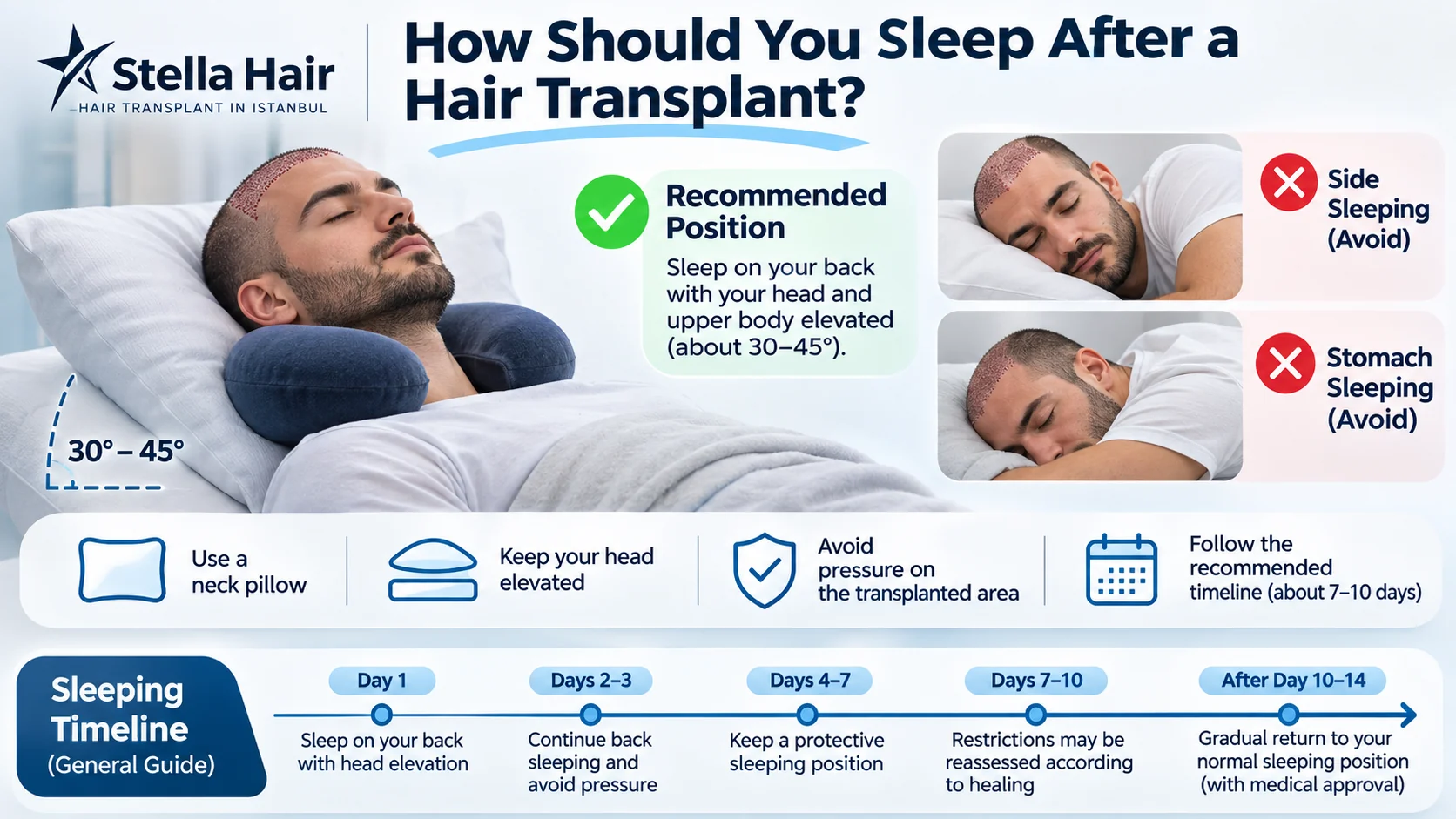
The sleeping position after a hair transplant is an important consideration during the early recovery period. In the first few nights following surgery, patients should minimize pressure and friction on the transplanted area while allowing the scalp to heal. Many people wonder how to sleep comfortably without disturbing newly implanted hair follicles, whether sleeping on their side is safe, and when they can return to their usual sleeping habits. At Istanbul Stella Hair, we emphasize the importance of following appropriate postoperative care instructions to support a comfortable and safe recovery.
At Stella Hair, we recommend that patients pay particular attention to their sleeping position after DHI, Sapphire FUE, and completely unshaven Long DHI hair transplantation. Although these techniques differ in certain aspects of the procedure, they all involve transferring hair follicles from a donor area to a recipient area, where the surrounding tissue needs time to heal. So, how should you sleep after a hair transplant? Is it necessary to sleep on your back during the first night? Can you use a travel neck pillow? How many days should you avoid sleeping on your side or stomach? This guide explains the recommended sleeping positions, the first 10 days of recovery, and the precautions that can help protect your transplanted grafts.
What Is the Best Sleeping Position After a Hair Transplant?
During the first few days after a hair transplant, patients are generally advised to sleep on their back with their head and upper body elevated at approximately 30–45 degrees.
The main purpose of this position is to reduce direct contact between the newly transplanted area and the pillow.
Hair transplantation creates numerous small surgical sites in the scalp. The tissue surrounding the newly implanted grafts gradually heals, helping the follicles become more securely anchored.
During the early recovery period, involuntary movements while sleeping may cause the recipient area to rub against pillows or bedding.
For this reason, many postoperative care protocols recommend sleeping on your back and keeping your upper body slightly elevated.
However, elevation should not be achieved simply by placing too many pillows directly underneath the head.
The head, neck, shoulders, and upper body should be supported in a balanced and comfortable position.
Excessive bending of the neck or forcing yourself into an uncomfortable posture is not recommended.
Your treating medical team's instructions should always take priority.
How Should You Sleep on the First Night After a Hair Transplant?
The first night after hair transplantation is one of the most important periods for protecting the recipient area from unnecessary pressure.
Immediately after surgery, the scalp may be sensitive, red, or mildly swollen.
Small surgical sites are still in the early stages of healing.
During the first night, patients are generally advised to:
- Sleep on their back.
- Keep the head and upper body slightly elevated.
- Prevent direct pressure on the transplanted area.
- Use a neck pillow if recommended by the medical team.
- Sleep on clean pillowcases and bedding.
- Avoid sleeping face down.
- Keep the head away from hard surfaces such as the bed frame or headboard.
Some patients may also experience tenderness in the donor area, particularly at the back of the scalp.
If this occurs, the position of the neck pillow or other supports may need to be adjusted to prevent unnecessary discomfort.
The appropriate arrangement depends on the location of the transplanted area and the extent of the procedure.
How Many Days Should You Sleep on Your Back After a Hair Transplant?
Many clinics recommend sleeping on your back for approximately 7–10 days after hair transplantation, although the exact period varies between patients and postoperative protocols.
Some instructions recommend sleeping with the head elevated mainly during the first 3–5 nights.
Other protocols advise maintaining protective sleeping arrangements for longer.
It is important to distinguish between two objectives:
- Keeping the head elevated to support comfort and postoperative swelling management.
- Preventing pressure and friction on the transplanted area while the scalp heals.
The need for head elevation may decrease earlier than the need to protect the recipient area from physical contact.
Hair Transplant Sleeping Position Timeline
Recovery Period
General Sleeping Recommendation
First night
Sleep on your back with your head and upper body slightly elevated
Days 2–3
Continue sleeping on your back and avoid pressure on the recipient area
Days 4–5
Maintain appropriate support and minimize friction
Days 6–7
Back sleeping is generally preferred while protecting the transplanted area
Days 7–10
Sleeping restrictions may be reassessed according to healing progress
Days 10–14
Gradual return to normal positions may be possible with medical approval
After day 14
Many patients can return to their normal sleeping habits if healing is satisfactory
This timeline is intended as a general guide.
The size and location of the recipient area, remaining scabs, scalp sensitivity, and individual healing progress may influence the recommended duration.
Can You Sleep on Your Side After a Hair Transplant?
Sleeping on your side is generally discouraged during the first few days after hair transplantation.
The main concern is direct contact between the scalp and the pillow.
Side sleeping can place pressure on the temples, sides of the scalp, or other areas that may have undergone transplantation.
Friction caused by turning or moving the head against the pillow may also irritate the healing tissue.
However, not every patient receives grafts in the same area.
For example, a person who has undergone transplantation only along the frontal hairline may have different contact risks from someone who has received grafts in both the frontal and crown regions.
Therefore, the appropriate time to return to side sleeping should be determined individually.
Can You Sleep on Your Side 7 Days After a Hair Transplant?
By the seventh day, the tissue surrounding the transplanted follicles may have healed considerably.
However, this does not mean that side sleeping is automatically suitable for every patient.
Scabbing, tenderness, or pressure against the recipient area may still be present.
Patients should continue following their medical team's advice until the recommended protective period has ended.
Can You Sleep on Your Side 10 Days After a Hair Transplant?
Some patients may be able to gradually return to side sleeping around day 10.
A clinical study examining graft anchoring after hair transplantation found that the risk of dislodging grafts decreased considerably as postoperative healing progressed, with substantially greater stability by approximately day nine.
However, this finding does not mean that the scalp can be subjected to unlimited pressure or friction after ten days.
The decision to resume side sleeping should still depend on individual healing and medical advice.
Can You Sleep on Your Stomach After a Hair Transplant?
Stomach sleeping is generally not recommended during the early recovery period following hair transplantation.
When sleeping face down, the forehead, frontal hairline, or other areas of the head may come into contact with the pillow.
This is particularly concerning for patients who have received grafts along the frontal hairline.
Pressure and friction can irritate healing tissue.
For this reason, patients should avoid stomach sleeping during the initial recovery period.
The appropriate time to resume this position should be determined according to the healing process and the advice of the treating medical team.
How to Use a Neck Pillow After a Hair Transplant
U-shaped travel neck pillows are commonly recommended after hair transplantation.
They may help support the head and limit involuntary movements during sleep.
A neck pillow can be particularly useful for patients who naturally tend to turn from side to side.
Tips for Using a Neck Pillow
- Choose a pillow that comfortably supports the neck.
- Make sure it does not push the head excessively forward or backward.
- Avoid any direct pressure on the transplanted area.
- Ensure that the pillow does not cause pain in the donor region.
- Keep the pillow clean and replace its cover when necessary.
A neck pillow alone may not provide sufficient elevation.
Additional support behind the upper back and shoulders may be needed.
The objective is not to force the neck into an upright position, but to maintain a stable and comfortable sleeping posture.
Patients who experience neck pain or significant discomfort should ask their medical team about alternative support arrangements.
How Many Pillows Should You Use After a Hair Transplant?
There is no universal number of pillows that every patient must use after hair transplantation.
Some postoperative care instructions suggest using two or three pillows.
However, the resulting position is more important than the number of pillows.
The aim is often to elevate the head and upper body by approximately 30–45 degrees.
Depending on the patient's needs, suitable support may include:
- Regular supportive pillows
- A U-shaped travel neck pillow
- A wedge pillow
- An adjustable bed
- A reclining chair with appropriate back support
The pillows should remain stable throughout the night.
An unstable arrangement may allow the patient's head to slide into an uncomfortable position.
If stacking multiple pillows causes neck pain, a more balanced support system should be considered.
Why Should You Keep Your Head Elevated After a Hair Transplant?
Keeping the head elevated is a common recommendation in postoperative hair transplant care.
There are two main reasons for this approach.
1. Protecting the Recipient Area
A stable sleeping position may help reduce direct contact between the transplanted area and bedding.
This is particularly important during the first few days following surgery.
2. Supporting Postoperative Swelling Management
Some patients experience temporary swelling around the forehead or eyes after hair transplantation.
This can be associated with fluids used during the procedure and the body's response to surgery.
Head elevation is commonly recommended in postoperative care protocols to help manage swelling.
However, it should not be considered a guaranteed method of preventing swelling.
Developing postoperative swelling does not necessarily mean that a patient slept incorrectly.
What Happens If You Accidentally Roll Onto Your Side While Sleeping?
Many patients worry about unintentionally changing their sleeping position during the night.
Accidentally rolling onto your side does not automatically mean that your transplanted hair follicles have been damaged.
The level of risk depends on several factors, including:
- How many days have passed since surgery
- Whether direct pressure was applied to the recipient area
- Whether significant friction occurred
- The stage of wound healing
If you notice that you have rolled onto your side, calmly return to the recommended position.
There is generally no reason to assume that every brief contact has caused graft loss.
However, if you notice bleeding, visible tissue damage, or another concerning change in the transplanted area, contact your medical team.
Avoid rubbing the scalp, removing scabs, or attempting to reposition tissue yourself.
Does Finding Hair on Your Pillow Mean You Have Lost Transplanted Grafts?
Finding hair strands on your pillow after transplantation does not always indicate graft loss.
During the weeks following surgery, transplanted hair shafts may temporarily shed as part of the postoperative shedding process commonly known as shock loss.
Shedding of the hair shaft is different from dislodging an entire transplanted follicular unit.
However, the situation may be different if bleeding and visible tissue fragments occur during the first few days after surgery.
If you suspect that a graft has been dislodged, contact your healthcare team for assessment.
A single hair strand on the pillow is not evidence that the hair transplant has failed.
What Should You Do If the Donor Area Hurts While Sleeping?
During FUE hair transplantation, follicular units are commonly extracted from the back and sides of the scalp.
Some patients experience tenderness in these areas after surgery.
Sleeping on the back may place the donor region in contact with the pillow.
In such cases, adjusting the neck support or pillow arrangement may improve comfort.
However, patients should avoid using hard supports that create persistent pressure on sensitive tissue.
If necessary, the sleeping arrangement should be modified according to the medical team's recommendations.
Severe, increasing pain or discomfort accompanied by redness, unusual discharge, or significant swelling requires medical evaluation.
Tips for Sleeping Comfortably After a Hair Transplant
The first nights following transplantation can be challenging, particularly for people who normally sleep on their side or stomach.
Adapting to a different sleeping position may temporarily affect sleep quality.
The following precautions may help improve comfort:
- Keep the bedroom at a comfortable temperature.
- Prepare your pillow arrangement before going to bed.
- Use appropriate neck and upper-body support.
- Keep pillowcases and bedding clean.
- Take prescribed pain medication only as instructed.
- Remove hard objects from areas where your head might accidentally make contact.
- Avoid using alcohol as a sleep aid.
- Do not take sleeping medication without medical advice.
Patients who already use prescribed sleep medication should not stop or adjust their treatment without consulting their healthcare professional.
Good sleep is important for overall recovery.
If the recommended position causes significant discomfort or prevents adequate sleep, ask the treating medical team about suitable alternatives.
Is the Sleeping Position Different After DHI and Sapphire FUE?
DHI and Sapphire FUE hair transplantation differ in certain aspects of the instruments and implantation procedures used.
However, both techniques involve extracting follicular units and implanting them into the recipient area.
As a result, protecting the healing scalp from pressure and friction remains important after either procedure.
There is no universal rule stating that every DHI patient can sleep on their side earlier or that Sapphire FUE always requires a longer period of back sleeping.
The recommended sleeping position depends on factors such as:
- The location of the recipient area
- The extent of transplantation
- Individual scalp sensitivity
- The healing process
- The postoperative instructions provided by the treating medical team
How Should You Sleep After Completely Unshaven Long DHI?
Patients who undergo completely unshaven Long DHI hair transplantation should also protect the recipient area from direct pressure and friction during the first days of recovery.
At Istanbul Stella Hair, our Long DHI approach is designed to preserve the existing hair length in both the donor and recipient areas.
However, keeping the hair unshaven does not mean that the scalp has not undergone surgery.
Hair follicles are still extracted from the donor region and implanted into the treatment area.
Therefore, appropriate sleeping precautions remain necessary.
Patients with longer existing hair should also avoid arrangements that pull, trap, or create friction against hair near the recently transplanted area.
The positioning of long hair during sleep should follow individualized postoperative instructions.
For more information, explore our hair transplant services in Istanbul.
Common Sleeping Mistakes After a Hair Transplant
Certain sleeping habits may create unnecessary risks during the initial recovery period.
Common mistakes include:
- Sleeping face down during the first nights.
- Pressing the recipient area directly against a pillow.
- Using unstable pillows that allow excessive head movement.
- Sleeping with the neck bent at an uncomfortable angle.
- Allowing the healing scalp to rub against rough surfaces.
- Frequently touching or checking the transplanted area.
- Returning to normal sleeping positions before the recommended protective period has ended.
Avoiding these mistakes may help reduce unnecessary irritation and mechanical pressure during early healing.
Frequently Asked Questions
What is the best sleeping position after a hair transplant?
During the first few days, patients are generally advised to sleep on their back with the head and upper body elevated at approximately 30–45 degrees. The transplanted area should not press directly against the pillow.
How many days should I sleep on my back after a hair transplant?
Many clinics recommend back sleeping for approximately 7–10 days. However, the duration of head elevation and the timing of returning to normal sleeping positions depend on individual recovery.
Can I sleep on my side the first night after a hair transplant?
Side sleeping is generally discouraged during the first night because it may cause pressure or friction against the transplanted area.
Can I sleep on my side 3 days after a hair transplant?
Day three is still part of the early recovery period. Patients are generally advised to continue protecting the recipient area by sleeping on their back.
Can I sleep normally 7 days after a hair transplant?
Healing may have progressed considerably by day seven, but the recipient area may still require protection. Returning to a normal sleeping position should follow the medical team's advice.
Can I sleep on my side 10 days after a hair transplant?
Some patients may gradually return to side sleeping around day 10. However, continued scabbing, tenderness, or pressure on the recipient area may require additional precautions.
Can sleeping on my stomach damage transplanted hair?
During early recovery, stomach sleeping may place pressure on the frontal hairline or other transplanted regions. It is generally best avoided until the medical team approves returning to this position.
Is a neck pillow necessary after a hair transplant?
A neck pillow is not mandatory for every patient. However, it may help stabilize the head and prevent unnecessary contact between the recipient area and bedding.
What happens if I accidentally rub my head against the pillow?
Brief accidental contact does not automatically cause graft loss. However, significant friction or pressure should be avoided, particularly during the first days after surgery. Contact your medical team if bleeding or visible tissue damage occurs.
Why should I sleep with my head elevated after a hair transplant?
Head elevation may help reduce unwanted contact with the recipient area and is commonly recommended as part of postoperative swelling management. However, it does not guarantee that swelling will be prevented.
When can I return to my normal sleeping position after a hair transplant?
Many patients may gradually return to their usual sleeping position within approximately 10–14 days, provided healing is satisfactory. The treating medical team's recommendations should determine the appropriate timing.
Is sleeping different after an unshaven hair transplant?
Completely unshaven Long DHI patients should follow the same basic principles of protecting newly transplanted grafts from pressure and friction. Keeping existing hair long does not eliminate the need for postoperative sleeping precautions.
Conclusion: How Long Should You Be Careful About Sleeping After a Hair Transplant?
How should you sleep after a hair transplant? In general, the preferred approach during early recovery is to sleep on your back with your head and upper body slightly elevated.
Protecting the recipient area from pressure, friction, and direct contact with bedding is particularly important during the first week.
Many postoperative protocols recommend maintaining a protective sleeping position for approximately 7–10 days, although the exact duration varies between patients.
Returning to side sleeping or stomach sleeping should depend on how well the scalp has healed.
A suitable neck pillow and proper upper-body support may help patients maintain a more comfortable sleeping arrangement.
At Istanbul Stella Hair, we emphasize the importance of individualized postoperative care following DHI, Sapphire FUE, and completely unshaven Long DHI hair transplantation.
For more information about our procedures and recovery guidance, visit our hair transplant services.
Scientific References
- Graft Anchoring in Hair Transplantation – Dermatologic Surgery, 2006
- Complications of Hair Transplant Procedures: Causes and Management
- International Society of Hair Restoration Surgery (ISHRS)
Medical Disclaimer: This article is intended for general educational purposes only. Sleeping positions, pillow use, and the timing of returning to normal sleeping habits after hair transplantation should be determined according to the individualized postoperative instructions provided by a qualified healthcare professional.
