Can Your Natural Hair Keep Falling Out After a Hair Transplant ?
Can natural hair keep falling out after a hair transplant? Learn why existing hair may thin, how shock loss differs, and ways to protect your hair.
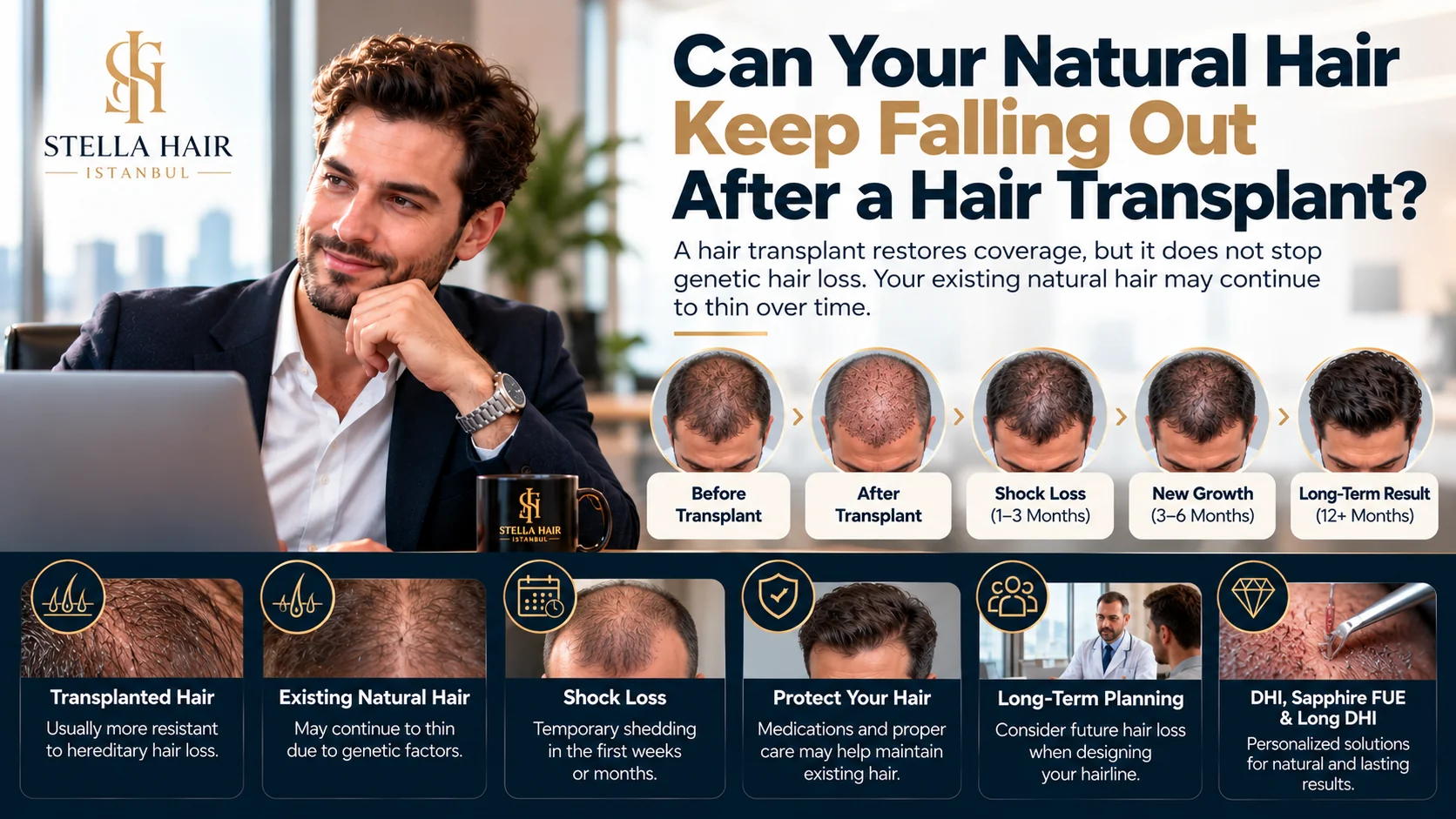
Yes, your natural hair can continue to fall out after a hair transplant. Hair transplantation restores coverage by moving suitable follicles into thinning or bald areas, but it does not stop the underlying process of genetic hair loss. This means the hair you already had before your procedure may continue to thin over the following months or years. At Istanbul Stella Hair, we encourage patients to think beyond the immediate transplant. Creating a natural-looking hairline is important, but understanding how your existing hair may change in the future is just as valuable.
At Istanbul Stella Hair, we offer DHI, Sapphire FUE, and Long DHI hair transplantation, with particular attention to natural hairline planning, donor area preservation, and postoperative care. For patients who still have natural hair between thinning areas, it is important to consider the possibility of ongoing hair loss. Our Long DHI package also includes one year of follow-up and consultation support, allowing patients to ask questions about recovery, hair growth, and changes they notice after the procedure.
Why Can Your Existing Hair Continue to Fall Out After a Hair Transplant?
The main reason is straightforward: a hair transplant does not change the genetic characteristics of your existing hair follicles.
During a hair transplant, suitable follicles are generally collected from the back or sides of the scalp and placed into areas affected by hair loss.
These donor follicles are often more resistant to the effects of androgenetic alopecia, also known as hereditary pattern hair loss.
However, the follicles that were already growing in the recipient area may remain sensitive to the same hormonal and genetic factors that caused the original thinning.
Imagine having a hair transplant at age 30 to restore your frontal hairline.
The newly transplanted follicles may continue producing hair while the natural hair immediately behind your new hairline gradually becomes thinner.
Several years later, you might notice that the frontal hairline still looks relatively full, but the area behind it has lost density.
This does not automatically mean the transplant failed.
It may simply mean that your original natural hair has continued following its hereditary hair loss pattern.
That is why long-term hair restoration planning should consider both transplanted and existing hair.
What Is the Difference Between Transplanted Hair and Natural Hair?
After a hair transplant, two groups of follicles may be growing in the treated region.
Transplanted hair comes from a donor area, usually at the back or sides of the scalp. When follicles are selected from a suitable, stable donor region, they tend to retain much of their resistance to hereditary hair loss.
Existing or native hair refers to the hair that was already present before transplantation. Its original genetic sensitivity remains unchanged, so it may continue to become thinner over time.
For example, your new frontal hairline may look fuller after transplantation.
However, if the native follicles in the mid-scalp region continue to miniaturize, a thinning area may gradually develop behind that hairline.
This is why a natural-looking result involves more than filling the visible gaps.
Hairline position, graft distribution, existing density, and the likely progression of hair loss all influence the overall plan.
Transplanted hair is generally more resistant to hereditary thinning, but that does not mean every hair on your head becomes resistant after surgery.
Is It Normal to Lose Existing Hair After a Hair Transplant?
Yes, some hair shedding after transplantation can be normal. However, temporary postoperative shedding and progressive genetic hair loss are two different situations.
Temporary shedding, often called shock loss, can affect transplanted hair and some of the existing hair around the recipient area.
Progressive genetic hair loss, on the other hand, may continue months or years after the operation.
Understanding the difference can help you recognize what may be happening.
Type of hair loss
When it may occur
Will the hair grow back?
Temporary shedding of transplanted hair shafts
Commonly within the first 2–8 weeks
New growth usually follows if the transplanted follicles survive.
Shock loss affecting existing hair
Usually during the first weeks or months
Often temporary, although severely miniaturized follicles may not recover.
Progressive hereditary hair loss
Over months or years
Hair may continue thinning without appropriate treatment.
For example, noticing extra shedding four weeks after your procedure does not necessarily mean your transplant has failed.
However, if your natural hair continues becoming thinner two years after transplantation, progressive hair loss may be responsible.
The timing, location, and pattern of shedding are important clues.
What Is Shock Loss After a Hair Transplant?
Shock loss refers to temporary hair shedding that may occur following transplantation.
The procedure places temporary stress on the scalp and nearby follicles. This can cause some hairs to enter a resting phase before shedding.
Shock loss can affect both newly transplanted hair shafts and existing natural hair.
Why Do Transplanted Hairs Fall Out?
During the first few weeks after transplantation, some newly implanted hair shafts may shed.
This can be concerning if you are expecting your hair to look progressively fuller every week.
However, the shedding of a hair shaft does not necessarily mean that the transplanted follicle has been lost.
When the follicle has successfully established itself, it can begin producing new hair during the following months.
Many patients start noticing new growth around the third or fourth month, with density and appearance continuing to develop afterward.
The complete cosmetic result takes considerably longer than the initial healing period.
Can Shock Loss Affect Existing Hair?
Yes. Your natural hair around the transplanted area can also experience shock loss.
For example, if grafts were implanted between existing thinning hairs, some of those native hairs may shed temporarily after the procedure.
As a result, the area may initially look thinner than it did before transplantation.
In many cases, healthy follicles recover and begin growing again.
However, hair that was already severely weakened by hereditary miniaturization may be less likely to return.
This is why the distinction between temporary shock loss and ongoing genetic thinning matters.
If shedding is unusually severe, continues for an extended period, or is accompanied by scalp symptoms, a medical examination is advisable.
How Can You Protect Existing Hair After a Transplant?
The most effective approach starts with identifying why your natural hair is thinning.
In androgenetic alopecia, genetically susceptible follicles gradually produce thinner, shorter hairs.
Transplantation does not directly treat this underlying process.
However, suitable medical treatments may help some patients preserve their existing hair.
Minoxidil for Existing Hair
Minoxidil is a medication used for certain types of hair loss.
In appropriate patients, it can help support hair growth and slow further thinning.
Results vary, and continued use is often necessary to maintain its benefits.
If you have recently undergone a hair transplant, do not apply minoxidil to the healing scalp without your treating doctor's approval.
The timing of restarting or beginning treatment should be established by your medical team.
Finasteride for Hereditary Hair Loss
Finasteride is a prescription medication used for male pattern hair loss.
It works by reducing the conversion of testosterone into dihydrotestosterone, commonly known as DHT.
In suitable male patients, finasteride can help slow progressive thinning and preserve existing hair.
However, it is not appropriate for everyone.
Potential adverse effects, medical history, and treatment preferences should be discussed with a qualified physician.
Finasteride also has important restrictions relating to pregnancy and its use in women.
Treatment for Other Causes of Hair Loss
Not every case of hair loss is hereditary.
Thyroid disorders, iron deficiency, some medications, and certain scalp conditions can also contribute to shedding.
If your hair loss is caused by another medical condition, treating that condition may be more useful than relying on cosmetic products.
A dermatologist can help identify the cause and determine which treatment options are appropriate.
The key point is that protecting existing hair may require a separate treatment plan alongside the hair transplant itself.
Can Your Hair Become Thin Again One or Two Years After Transplantation?
Yes. Existing natural hair can continue thinning one, two, or several years after a hair transplant.
This is particularly relevant for people who undergo transplantation at a younger age while their hereditary hair loss is still progressing.
For example, someone who receives a frontal hairline transplant at age 27 may experience additional mid-scalp thinning by age 30.
The transplanted frontal area may remain relatively dense while the native hair behind it gradually becomes thinner.
This can create a visible difference in coverage between the transplanted and untreated regions.
The issue is not necessarily that the transplanted follicles have disappeared.
Instead, the surrounding natural hair may have continued to miniaturize.
That is why planning for future hair loss can be as important as treating the visible thinning you have today.
Will You Need a Second Hair Transplant If Your Natural Hair Keeps Falling Out?
Not everyone who undergoes a hair transplant will need a second procedure.
However, if hereditary hair loss progresses and new bald areas develop, additional transplantation may become an option.
For example, your first transplant may have focused on rebuilding the frontal hairline.
Several years later, your crown may begin losing density.
If the crown becomes a significant concern, you may consider another procedure to restore coverage there.
The possibility of a second transplant depends on the condition of your donor area and the number of suitable follicles remaining.
This is why responsible donor management is important from the beginning.
Using every available donor follicle in the first operation may limit future options.
At Istanbul Stella Hair, we emphasize the importance of understanding donor area preservation and planning graft placement according to the patient's existing hair characteristics.
A thoughtful first procedure should take the potential future progression of hair loss into account.
Does DHI Stop Existing Hair From Falling Out?
No. DHI hair transplantation does not stop genetic hair loss in your existing follicles.
DHI is a hair transplantation technique in which prepared grafts are placed using specialized implanter pens.
For suitable patients, it can be used to implant follicles into areas where some natural hair remains.
However, the technique does not change the genetic sensitivity of those existing follicles.
For example, someone may receive DHI transplantation between thinning hairs in the frontal region.
The new grafts may grow successfully, while some of the surrounding native hair continues to thin over the following years.
This is why existing hair preservation should be considered even when DHI is selected.
If you would like to understand the procedure in more detail, visit our DHI Hair Transplant page.
Is Long DHI Suitable for People Who Want to Preserve Their Existing Hair?
Long DHI can be an attractive option for people who want to maintain their current hairstyle while exploring hair transplantation.
At Istanbul Stella Hair, Long DHI focuses on preserving existing hair length wherever the treatment plan allows.
This approach may appeal to people who have thinning between longer natural hairs and do not want a dramatic haircut.
For example, someone with thinning around the temples or frontal hairline may want to improve coverage without having all their hair shaved.
For suitable patients, Long DHI offers an option worth exploring.
However, one important distinction must be clear.
Long DHI aims to preserve existing hair length during the transplantation process. It does not stop the genetic loss of existing hair follicles.
Patients who undergo Long DHI may still experience hereditary thinning in untreated natural hair over time.
If that happens, a separate medical assessment may be needed to discuss ways to manage the ongoing hair loss.
Why Is Follow-Up Important at Stella Hair?
The first year after transplantation is an important period for monitoring the development of new hair growth.
At Istanbul Stella Hair, our Long DHI package includes one year of follow-up and consultation support.
The package also includes preoperative blood tests, PRP, an application offered under the name Ice Cell Therapy, shampoo and foam, a neck pillow, and postoperative care products.
These services help patients understand the treatment and aftercare process.
For example, if your hair appears thinner during the first few months, you can ask questions about the expected growth stages and postoperative shedding.
If changes suggest progressive hair loss rather than normal recovery, a medical examination can help identify the cause.
Our follow-up and consultation service gives patients an opportunity to seek guidance as their transplanted hair develops.
You can explore our Long DHI Hair Transplant page to learn more about the technique and package details.
How Can You Reduce the Risk of Further Hair Thinning After a Transplant?
Maintaining a fuller appearance after transplantation involves more than caring for your scalp during the first few weeks.
If your existing hair is susceptible to hereditary thinning, a longer-term approach may be useful.
Monitor changes in your natural hair. Pay attention to the frontal hairline, mid-scalp, and crown. Taking photographs from similar angles and under similar lighting can help you notice changes over time.
Follow any prescribed treatment consistently. If your doctor recommends medication to manage hair loss, follow the instructions and discuss any concerns before changing or stopping treatment.
Take postoperative care seriously. During the early recovery period, follow the washing instructions and avoid unnecessary friction or pressure on the transplanted area.
Act when you notice new thinning. If your native hair begins to look progressively thinner months or years after transplantation, seek advice rather than waiting for extensive hair loss.
Keep track of your hair development. Follow-up visits or consultations can help distinguish normal changes during recovery from issues that require further investigation.
The goal is not to worry about every hair that falls out.
It is to understand the difference between normal shedding and progressive thinning so you can make informed decisions.
Frequently Asked Questions About Existing Hair Loss After a Hair Transplant
Can my old hair fall out after a hair transplant?
Yes. A hair transplant does not prevent hereditary hair loss in your existing natural follicles. Hair that was already present before the operation may continue to become thinner over time.
Is it the transplanted hair or the existing hair that falls out?
Both can shed temporarily during the early recovery period. Over the longer term, existing natural hair that remains genetically susceptible to pattern hair loss is generally more likely to continue thinning.
Will my existing hair grow back after shock loss?
In many cases, healthy existing follicles recover and produce new hair after temporary shock loss. However, follicles that were already severely miniaturized may not fully recover.
Is it normal to lose hair one year after a transplant?
Hair shedding or thinning one year later may be related to ongoing hereditary hair loss, another scalp condition, or other causes. If you notice significant changes, a dermatologist can help identify which follicles are affected and why.
Does a hair transplant permanently stop genetic hair loss?
No. Transplantation moves suitable follicles into thinning areas, but it does not stop genetic hair loss in the natural follicles that remain untreated.
Do I need minoxidil or finasteride after a transplant?
Not everyone needs these medications. However, they may be useful for suitable patients experiencing ongoing hereditary hair loss. A physician should determine whether treatment is appropriate and when it can be started after surgery.
Does Long DHI prevent natural hair from falling out?
No. Long DHI focuses on preserving existing hair length during transplantation. It does not prevent hereditary hair loss or eliminate the need to consider long-term hair preservation.
Will I definitely need another transplant in the future?
No. Many patients do not require a second procedure. However, if natural hair continues thinning and new areas of hair loss develop, another transplant may be considered if sufficient donor follicles remain.
Think Beyond Your Hairline With Istanbul Stella Hair
A hair transplant is not only about adding follicles to areas where hair has already disappeared.
It is also important to understand how your existing natural hair may change over time.
If your hair loss is still progressing, your future appearance depends on both the transplanted follicles and the natural hair that remains.
At Istanbul Stella Hair, we help patients explore their options with attention to existing hair density, donor area preservation, hairline design, and the characteristics of different transplantation techniques.
We provide information about DHI, Sapphire FUE, and Long DHI, including what to expect during recovery and how transplanted hair develops afterward.
For patients who prefer to preserve their current hairstyle, our Long DHI service offers an approach designed around hair-length preservation.
Our Long DHI package also includes one year of follow-up and consultation support, allowing patients to ask questions during the hair growth and recovery process.
If you are considering transplantation, you can share your hair loss history, current concerns, and expectations with us.
Contact Istanbul Stella Hair to explore your hair transplant options and learn more about our treatment and aftercare services.
Phone and WhatsApp: +90 536 662 94 17
Address: Balmumcu Mahallesi, Bestekar Şevki Bey Sokak No 17, Beşiktaş, Istanbul, Türkiye
Contact: Book a Consultation With Istanbul Stella Hair
This article is intended for general information. Ongoing hair loss after transplantation may have different causes. Diagnosis, medication decisions, and treatment planning should be based on an appropriate medical assessment.
