Best Time of Year for a Hair Transplant: Summer or Winter?
What is the best time of year for a hair transplant? Compare summer and winter procedures, recovery conditions, sun exposure and seasonal aftercare.
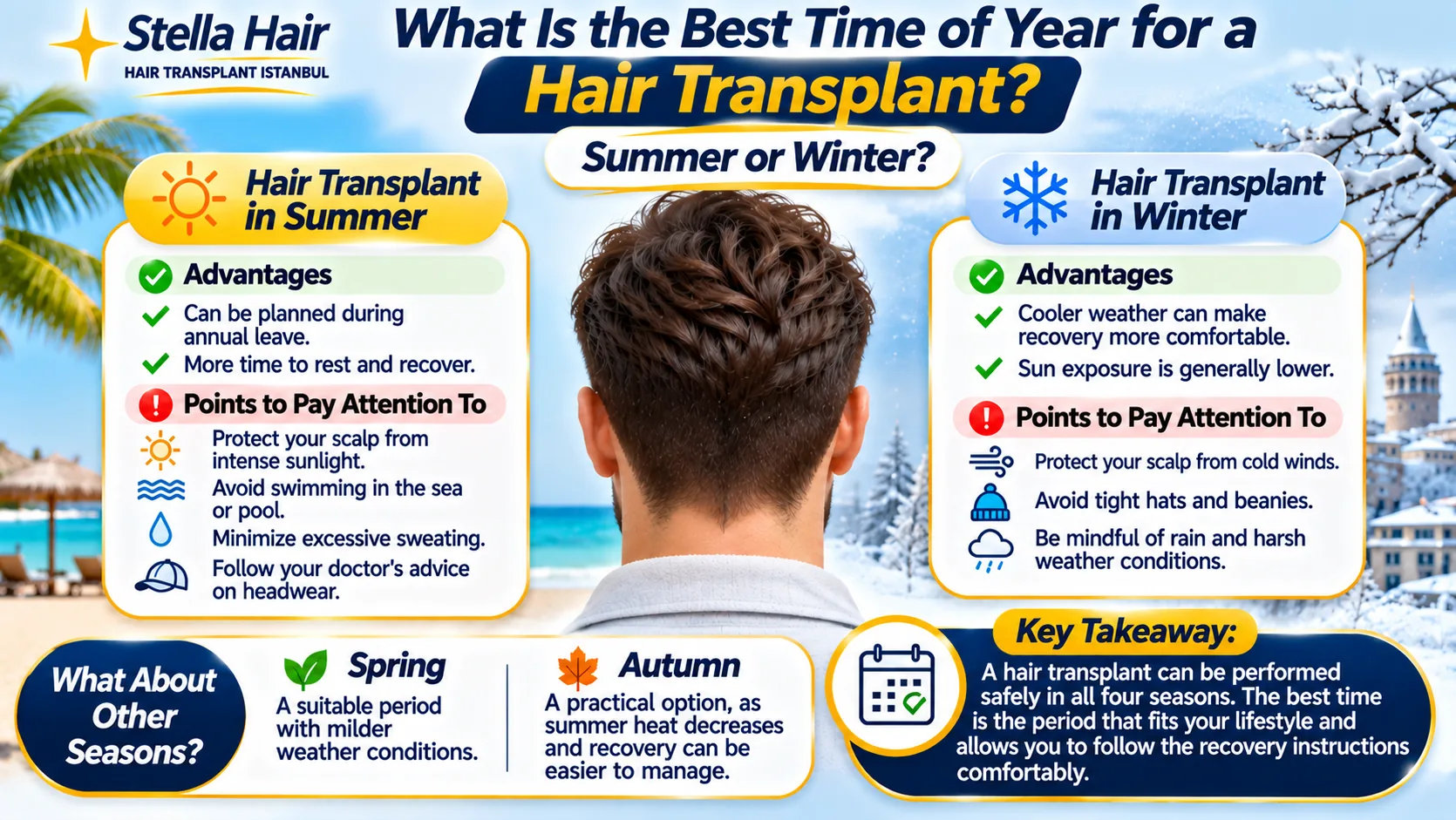
What Is the Best Time of Year for a Hair Transplant? Summer or Winter?
What is the best time of year for a hair transplant? This is one of the questions many people ask when planning hair restoration surgery. Some patients prefer summer because they can take time off work, while others believe that winter offers more comfortable conditions for recovery. Hot weather, sweating, sun exposure, and swimming are common concerns during the summer months. Meanwhile, patients considering surgery in winter often wonder whether cold temperatures, wind, or wearing hats could affect their recovery. At Istanbul Stella Hair, we consider not only the transplantation technique but also each patient's lifestyle, daily activities, and ability to follow postoperative care instructions.
At Istanbul Stella Hair, we emphasize that hair transplantation does not have to be performed during one particular season. When a patient is medically suitable, hair transplantation can generally be carried out throughout the year. However, seasonal conditions may influence how comfortable the early recovery period feels and how easily patients can follow their aftercare plan. So, is it better to get a hair transplant in summer or winter? Does hot weather damage transplanted follicles? Is healing faster during colder months? In this guide, we compare hair transplantation across different seasons and explain how to choose an appropriate time for surgery.
What Is the Best Season for a Hair Transplant?
There is no single season that is medically proven to be the best for every hair transplant patient.
Hair transplantation can generally be performed during spring, summer, autumn, or winter.
The most important factors are the patient's medical suitability, appropriate surgical planning, and the ability to follow postoperative care instructions.
Autumn and winter may offer practical advantages for some individuals because temperatures are usually lower and avoiding intense sunlight may be easier.
However, this does not mean that hair transplants performed in winter automatically produce better results.
Similarly, there is no established universal rule showing that summer hair transplantation has lower graft survival rates simply because of the season.
When choosing the timing of surgery, several factors should be considered:
- Availability of time off work
- Opportunities for rest during recovery
- Daily exposure to sunlight
- Working conditions and physical activity
- Sweating and high temperatures
- Swimming and holiday plans
- The need to wear helmets or protective headgear
- Travel arrangements
- General health and medical suitability
The most appropriate time is usually the period when a patient can comfortably follow the recommended recovery plan.
Can You Get a Hair Transplant in Summer?
Yes. Hair transplantation can be performed during the summer months.
Warm weather alone is not a contraindication to hair transplant surgery.
However, summer conditions may require additional attention during the early postoperative period.
High temperatures, increased sweating, and stronger sunlight can make recovery less comfortable for some patients.
For example, individuals who work outdoors, regularly exercise, or spend considerable time at the beach may need to adjust their routines after surgery.
Advantages of Getting a Hair Transplant in Summer
Summer can be a convenient season for patients who have greater flexibility in their schedules.
Some people can arrange longer holidays or annual leave during the summer months.
This may allow them to take time away from work and focus on the initial recovery period.
Potential practical advantages include:
- More opportunities to take annual leave
- Flexible travel schedules
- Time to rest away from work
- Easier planning of postoperative appointments
- The possibility of arranging surgery during an extended holiday
However, having time off during the summer does not mean that patients can immediately return to all holiday activities.
Swimming, sunbathing, and strenuous outdoor exercise may need to be postponed according to postoperative instructions.
What Should You Avoid After a Summer Hair Transplant?
Patients undergoing hair transplantation in summer should pay particular attention to protecting the scalp during healing.
Important precautions may include:
- Avoiding prolonged exposure to strong sunlight
- Limiting activities that cause excessive sweating during early recovery
- Avoiding swimming until medically cleared
- Preventing friction and scratching around the transplanted area
- Staying away from excessively hot environments
- Following the recommended washing and aftercare routine
Summer transplantation can be successful, but the surrounding environmental conditions may require greater care during recovery.
Can Sweating Damage Transplanted Hair Follicles?
Sweating is one of the most common concerns among patients considering a summer hair transplant.
Sweating does not automatically cause transplanted follicles to fail.
However, excessive sweating may increase irritation or itching while the scalp is healing.
There is also a risk of accidentally rubbing, scratching, or wiping the recipient area too aggressively.
These actions can be particularly problematic during the early postoperative period.
Heavy physical activity may also increase blood pressure, body temperature, and the possibility of accidental impact to the treated scalp.
Therefore, patients may be advised to temporarily avoid strenuous exercise and activities that lead to heavy sweating.
Spending the first few days in a comfortable, temperature-controlled environment can make recovery easier.
However, patients should not apply ice directly to transplanted follicles or use unapproved cooling methods.
The treating medical team's recommendations should always take priority.
Is Sun Exposure Dangerous After a Hair Transplant?
Sun protection is an important part of postoperative care, particularly during the summer.
Hair transplantation creates small surgical wounds in the scalp.
During early healing, the treated skin may be sensitive, red, or covered with small scabs.
Excessive sunlight can contribute to irritation and increase the risk of sunburn.
Patients are therefore generally advised to avoid prolonged, direct sun exposure while the scalp is healing.
However, protecting the head from sunlight does not necessarily mean wearing a tight hat immediately after surgery.
Headwear that presses against or rubs newly implanted follicles may interfere with recovery.
The appropriate time to begin wearing a hat should be determined by the treating healthcare professionals.
Similarly, sunscreen products should not be applied directly to incompletely healed recipient areas without medical approval.
The goal is to protect the healing scalp without causing unnecessary friction, pressure, or irritation.
Can You Get a Hair Transplant in Winter?
Yes. Winter can be a convenient time for hair transplantation.
For patients who experience significant discomfort in hot weather, cooler temperatures may make the early recovery period more manageable.
During winter, some individuals spend less time outdoors and participate in fewer swimming or beach activities.
This can make certain postoperative restrictions easier to follow.
However, winter transplantation is not inherently more successful than transplantation performed during other seasons.
Advantages of a Winter Hair Transplant
Potential practical advantages include:
- Lower temperatures may reduce excessive sweating.
- Avoiding intense sunlight may be easier.
- Swimming and beach activities may be less frequent.
- Some patients may find it easier to rest indoors.
- Outdoor physical activities may be easier to limit.
These factors can make winter an appealing option for certain patients.
Nevertheless, winter also brings its own considerations.
Cold winds, rain, and the need for warm headwear should be taken into account during postoperative planning.
Can Cold Weather Damage Transplanted Hair Follicles?
Patients often worry that cold temperatures could negatively affect newly transplanted hair.
Normal exposure to cool weather during everyday activities is not established as a direct cause of graft failure.
However, the scalp may remain sensitive following surgery.
Cold winds, heavy rain, and extreme weather conditions can cause discomfort.
Another concern is the use of tight winter hats.
Wool hats, beanies, and certain hoods may create friction or pressure against the recipient area.
This is particularly important during the first stage of healing.
Patients should follow their healthcare team's instructions regarding headwear and avoid applying unnecessary pressure to the transplanted scalp.
Protecting the surgical area is more important than choosing a season based solely on temperature.
Is Autumn a Good Time for Hair Transplant Surgery?
Autumn is a popular time for planning elective procedures because temperatures often become more moderate after summer.
For some patients, the end of the beach and holiday season makes it easier to follow postoperative restrictions.
Lower temperatures may also reduce discomfort associated with excessive sweating.
Potential advantages of autumn include:
- More moderate outdoor temperatures
- Less frequent exposure to intense summer heat
- Fewer swimming and sunbathing plans
- Greater flexibility in planning recovery before winter
- Comfortable conditions for rest and light daily activities
However, autumn weather varies by location.
In Istanbul, for example, autumn may include rain, strong winds, and changing temperatures.
Patients traveling for transplantation should consider the local weather and transportation arrangements.
Autumn may be a practical season for hair transplantation, but it does not guarantee better graft survival or faster recovery.
Is Spring Suitable for Hair Transplantation?
Spring can also be a suitable time for hair transplantation.
In many regions, temperatures become milder as winter ends, while the intense heat of summer has not yet arrived.
This may make postoperative rest and daily activities more comfortable.
However, spring can also bring increased outdoor activity and greater exposure to sunlight.
Patients who regularly participate in outdoor sports or recreational activities may need to temporarily adjust their schedules.
As with every other season, the important consideration is whether the patient can protect the scalp and follow postoperative instructions.
Spring is not automatically better or worse than summer, autumn, or winter from a surgical perspective.
Summer vs Winter Hair Transplant: Comparison Table
The following table summarizes the main practical differences between undergoing hair transplantation during summer and winter.
Factor
Summer
Winter
Can surgery be performed?
Yes
Yes
Sun exposure
Generally higher
Generally lower
Sweating
May increase with heat
Often less frequent
Swimming and beach activities
More common
Usually less common
Headwear considerations
Sun protection
Protection from cold
Recovery time
Depends on individual factors
Depends on individual factors
Graft survival
No proven universal seasonal advantage
No proven universal seasonal advantage
Time off work
Depends on holiday arrangements
Depends on work schedule
The most important point is that the success of a hair transplant should not be attributed to the season alone.
Medical suitability, donor hair quality, surgical planning, and appropriate postoperative care are more significant considerations.
What Is the Best Month for a Hair Transplant?
There is no single month that is universally best for hair transplantation.
A procedure performed in January does not automatically produce better results than one performed in June.
Instead, patients should select a month that allows them to prepare properly and follow their recovery instructions.
For example:
- Someone working outdoors may prefer a period with less intense sunlight.
- A patient with extended summer leave may choose to schedule surgery during their holiday.
- Someone required to wear a helmet at work should arrange sufficient recovery time before returning to regular headgear use.
- International patients should consider travel arrangements and follow-up appointments.
- Athletes may prefer a period when they can temporarily reduce training.
At Istanbul Stella Hair, we believe the ideal timing depends on a combination of medical suitability, personal circumstances, and postoperative planning.
Why Are the First 10–14 Days After a Hair Transplant Important?
The early postoperative period is particularly important for protecting the newly implanted follicles and allowing small surgical wounds to heal.
During approximately the first 10–14 days, patients may need to take additional precautions to avoid friction, impact, or unnecessary contact with the recipient area.
Common postoperative recommendations include:
- Following the prescribed washing instructions
- Avoiding scratching the treated scalp
- Not forcibly removing scabs
- Avoiding tight headwear until medically approved
- Temporarily limiting strenuous physical activity
- Protecting the scalp from intense sunlight
- Avoiding environmental conditions that may cause irritation
Recovery timelines vary.
A patient should not assume that every restriction automatically ends after a specific number of days.
This is why arranging adequate rest and flexibility during the first two weeks can be useful regardless of the season.
Does Hair Transplant Recovery Take Longer in Summer?
There is no reliable basis for claiming that hair transplant recovery is always slower during summer.
However, some patients may experience greater discomfort because of high temperatures, increased sweating, and stronger sunlight.
These environmental factors can make postoperative restrictions more difficult to manage.
Winter also has potential disadvantages, including cold winds and the need for hats or protective clothing.
Therefore, the speed of recovery should not be judged solely by the season.
General health, surgical extent, individual healing characteristics, and adherence to postoperative instructions remain important factors.
Do Hair Transplant Results Change Depending on the Season?
Hair transplantation outcomes depend on biological and surgical factors rather than the calendar month alone.
Following surgery, temporary shedding of transplanted hair shafts may occur.
New hair commonly begins becoming visible around the third or fourth month.
Hair coverage and thickness may continue improving over the following months.
Results are often largely established around twelve months, although some patients may experience further maturation beyond the first year.
For example, a patient undergoing transplantation in winter may begin noticing new hair growth during spring.
A patient undergoing surgery in summer may observe similar changes during autumn.
However, these seasonal differences simply reflect when the surgery was performed.
They do not prove that one season automatically accelerates the biological hair growth cycle.
Does the Season Matter for an Unshaven Hair Transplant?
Patients considering unshaven hair transplantation should also take seasonal conditions into account.
Preserving existing hair length does not eliminate the need for postoperative care.
At Istanbul Stella Hair, we offer Long DHI hair transplantation as a completely unshaven procedure.
Our Long DHI approach focuses on preserving the existing hair length in both the donor and recipient areas.
This may be particularly relevant for patients who wish to maintain their hairstyle throughout the treatment process.
However, even with a completely unshaven approach, selected hair follicles are extracted and transplanted.
Therefore, the scalp still requires appropriate postoperative protection.
During summer, patients should be mindful of strong sunlight and excessive sweating.
During winter, they should avoid tight headwear that may press against the recipient area.
The ideal season for Long DHI depends on the same individual considerations that apply to other hair transplantation approaches.
Frequently Asked Questions
What is the best season for a hair transplant?
There is no universally best season. Hair transplantation can generally be performed throughout the year. Autumn and winter may offer practical advantages for some patients, but the ideal timing depends on medical suitability and the ability to follow postoperative care instructions.
Is it safe to get a hair transplant in summer?
Yes. Summer hair transplantation can be performed when medically appropriate. Patients should take precautions against excessive sun exposure, heavy sweating, and activities that could irritate the healing scalp.
Are hair transplants more successful in winter?
There is no established universal rule showing that winter procedures produce better results. Cooler weather may make recovery more comfortable for certain patients, but surgical outcomes depend on many factors.
What is the best month to get a hair transplant?
The best month is usually the one that allows adequate recovery time, appropriate medical preparation, and compliance with postoperative instructions.
Can sweating ruin a hair transplant?
Sweating alone does not automatically cause graft failure. However, excessive sweating may increase irritation and lead to scratching or rubbing of the treated area. Strenuous exercise may need to be temporarily restricted.
Can I wear a winter hat after a hair transplant?
Tight hats and beanies may place pressure on newly transplanted follicles. Patients should follow their healthcare team's instructions before wearing headwear after surgery.
Is autumn a good season for hair transplantation?
Autumn can be a convenient season because temperatures may be moderate and outdoor summer activities become less frequent. However, it does not guarantee better medical outcomes.
When can I swim after a summer hair transplant?
The timing depends on healing and the recommendations of the treating healthcare professionals. Swimming may need to be postponed during the early recovery period because of infection, irritation, and sun exposure concerns.
Conclusion: The Best Time for a Hair Transplant Depends on Your Lifestyle
What is the best time of year for a hair transplant? The answer depends on individual circumstances rather than one universally superior season.
Hair transplantation can generally be performed during spring, summer, autumn, or winter.
Cooler seasons may make it easier for some patients to avoid excessive sweating and intense sunlight, while summer holidays may offer more flexibility for taking time off work.
However, seasonal comfort should not be confused with guaranteed medical success.
Appropriate patient selection, donor area preservation, individualized surgical planning, and postoperative care remain essential.
At Istanbul Stella Hair, we consider each patient's medical history, hair characteristics, lifestyle, and recovery needs when discussing treatment planning.
Instead of waiting for a particular season, we recommend choosing a time when medical suitability has been established and adequate recovery arrangements can be made.
For more information about available techniques and treatment planning, explore our hair transplant services.
Medical Disclaimer: This article is intended for general educational purposes only. The timing of hair transplantation, medical eligibility, and postoperative care should be determined through an individual assessment by qualified healthcare professionals.
